
News
Power crisis blamed on gas shortages, sector debts

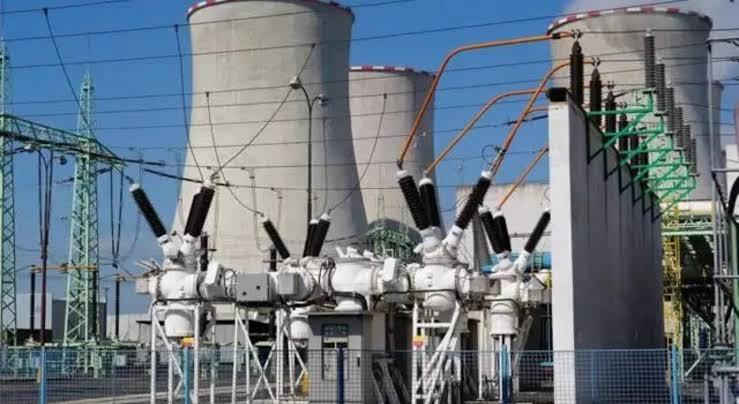
An energy expert, Olukayode Akinrolabu, has blamed Nigeria’s persistent electricity crisis on gas shortages, mounting debts and entrenched systemic inefficiencies.
Mr Akinrolabu, a member of the Science and Technology Education Research Group at Lagos State University, said on Tuesday in Lagos.
This comes amid continued erratic electricity supply, with households and businesses facing prolonged outages and rising energy costs nationwide.
Describing the situation as “appalling”, the expert said it reflected deeper structural challenges that had persisted within Nigeria’s electricity sector for decades.
According to him, the immediate cause of poor supply is declining electricity generation, largely driven by inadequate gas supply to thermal power plants.
He explained that most of Nigeria’s installed capacity depended on gas-fired plants, making the sector highly vulnerable to disruptions in gas availability.
He said pipeline vandalism in Rivers has worsened supply challenges, damaging critical infrastructure needed to deliver gas to power stations.
Mr Akinrolabu added that government debts exceeding N3.3 trillion to gas suppliers further constrained their ability to maintain a consistent supply.
He said, “The ongoing crisis is fundamentally a generation problem. Gas suppliers can no longer sustain delivery due to unpaid debts, while infrastructure vandalism continues to cripple supply channels.”
According to him, current electricity generation stands at about 2,669 megawatts, far below the expected average of roughly 5,000 megawatts.
Mr Akinrolabu said this shortfall had widened the gap between electricity demand and supply, leaving millions of Nigerians without reliable power.
He noted that the deficit had forced an increased reliance on hydroelectric power, which remains vulnerable to seasonal water-level fluctuations.
He added that gas-fired plants, which should provide stable baseload power, were operating far below optimal capacity due to supply constraints.
Mr Akinrolabu said public criticism often targeted distribution companies and transmission operators, despite their limited role in immediate generation challenges.
However, he acknowledged that longstanding inefficiencies within distribution companies worsened the impact of supply shortages on consumers nationwide.
He cited obsolete and dilapidated infrastructure as a major issue, noting that many networks required urgent upgrades to function effectively.
He also identified poor maintenance culture as a persistent problem affecting reliability and efficiency within the distribution segment.
According to him, inadequate customer data has hindered electricity distribution companies’ effective planning and demand forecasting.
He added that a mismatch between energy demand and available supply continued to strain the system and limit service delivery.
Mr Akinrolabu also pointed to revenue leakages and fraudulent practices as internal challenges undermining the sector’s financial sustainability. He said persistent vandalism of power installations has further compounded operational difficulties for distribution companies.
On tariffs, Mr Akinrolabu said many Nigerians lacked a clear understanding of the economics underpinning electricity pricing and sector sustainability.
According to him, electricity tariffs remain among the lowest globally due to heavy government subsidies intended to cushion consumers.
“Nigerians pay less than $0.14 per kilowatt-hour, significantly below global standards. The government subsidises the sector by about N200 billion monthly and nearly N2.98 trillion annually.
“The current subsidy regime is unsustainable and continues to discourage much-needed private investment in power infrastructure. Investors are reluctant to commit funds to a sector where cost recovery remains uncertain,” he said.
He noted that about $2.5 billion was required to generate 1,000 megawatts of electricity, highlighting the scale of investment needed. NAN
-

 Stock Market2 days ago
NGX market capitalisation shed N1.38trn to close at N127.75trn
-

 News2 days ago
Abuja court jails former acting AGF, Nwabuoku, to 72yrs in prison over N868m fraud
-
 News2 days ago
Tony Elumelu Foundation unveils 3,200 entrepreneurs for 2026, commitment to “democratising prosperity” across Africa
-

 News24 hours ago
Binance seeks out-of-court settlement with Nigeria over alleged tax evasion
-
 Economy2 days ago
CBN reaffirms commitment to inflation-targeting monetary policy
-

 Oil and Gas43 minutes ago
NUPRC vows not to approve divestments that doesn’t meet considerations
-

 Oil and Gas2 days ago
Oil prices plunge 8% on US-Iran talks to resolve hostilities in the Middle East
-
Uncategorized2 days ago
Middle East shock gives Dangote Refinery leverage as cheap imports dry up