Maritime
SEREC urges stronger port, border security

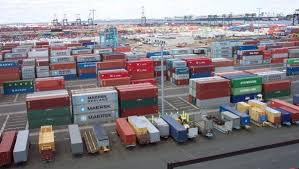
The Sea Empowerment and Research Centre (SEREC) has urged the federal government to strengthen security at Nigeria’s ports, borders and trade corridors.
SEREC ‘s Head of Research, Eugene Nweke, who made the call in a statement on Sunday in Abuja, commended the Nigeria Customs Service (NCS) for its intelligence-led interventions.
Mr Nweke lauded the Comptroller-General (CG) of NCS, Bashir Adeniyi, and the NCS management for sustained vigilance, intelligence-led interventions, and remarkable interceptions of prohibited and dangerous consignments.
He said the seizures increasingly constituted a critical first line of defence in Nigeria’s national-security architecture.
Mr Nweke said recurring interceptions of arms, ammunition, illicit drugs, prohibited goods, unreported currency and other sensitive consignments should no longer be regarded as isolated smuggling incidents.
“It is increasingly difficult to regard the recurring interception of arms and ammunition, weapons, illicit drugs, prohibited goods, unreported currency and other sensitive consignments as isolated incidents of smuggling,” he said.
According to him, Nigeria’s maritime and land-frontier networks are being persistently tested and exploited by transnational criminal syndicates, arms traffickers, drug cartels and organised smuggling networks.
“A prohibited weapon intercepted at a port is potentially a weapon denied to a criminal, terrorist or violent extremist network,” Mr Nweke said.
He urged the federal government to intensify intelligence gathering, border surveillance, inter-agency coordination and preventive security measures, particularly ahead of the 2027 general elections.
Mr Nweke said election periods could create additional vulnerabilities through increased movement of people and goods, illicit financing, proliferation of small arms and light weapons and communal tensions.
“The recurring interceptions should trigger deeper national-security assessment, intelligence coordination and preventive action,” he said.
He called for increased investment in customs intelligence and risk-management systems, real-time information sharing, advance cargo information analysis, non-intrusive inspection technologies, maritime and land-border surveillance.

He also advocated stronger intelligence fusion, regional and international customs cooperation, specialised training and improved logistics and welfare for officers deployed to sensitive locations.
Mr Nweke said freight forwarders, customs brokers, bonded operators, shipping and logistics companies should also be integrated into the national security framework because they occupy strategic positions within the supply chain.
According to him, they often possess information about consignors, consignees, cargo descriptions, documentation and routing.
He, however, said while some legitimate operators could be unknowingly exploited by criminal networks, “there are instances where unscrupulous industry actors knowingly facilitate, participate in or profit from illicit trade”.
Mr Nweke advocated a national port and border trade-security enlightenment and compliance programme to educate supply-chain stakeholders on suspicious consignments, cargo-risk indicators, concealment techniques, reporting channels and legal consequences.
“The objective should not be to criminalise the entire freight-forwarding and Customs-brokerage profession. Rather, it should be to professionalise, educate, sensitise and empower the legitimate trade community to become an additional layer of vigilance,” he said.
Mr Nweke said Nigeria needed to move from “Customs versus smugglers” to a broader framework of shared responsibility for a secure and legitimate trade, stressing that stronger border security should not result in unnecessary delays for compliant traders.
He urged stronger intelligence sharing among the NCS, Nigerian Navy, Nigerian Maritime Administration and Safety Agency (NIMASA), Nigeria Police Force, immigration authorities, and financial-intelligence institutions.
All measures, he said, should be put in place to ensure Nigeria’s ports remained gateways for legitimate commerce rather than channels for terrorism, banditry, organised crime, illicit arms and narcotics.
“The message from these interceptions is clear: criminal networks are constantly probing the vulnerabilities of Nigeria’s borders and legitimate trade channels.
“Nigeria must therefore not wait for a catastrophic incident before strengthening its defences,” Nweke added. NAN