Business
Sharp, Long-lasting slowdown to hit developing countries hard 2023 global growth to slow to 1.7%
The World Bank Group has said that global economy is projected to grow by 1.7% in 2023 and 2.7% in 2024. The sharp downturn in growth is expected to be widespread, with forecasts in 2023 revised down for 95% of advanced economies and nearly 70% of emerging market and developing economies. It said that over the next two years, per-capita income growth in emerging market and developing economies is projected to average 2.8%—a full percentage point lower than the 2010-2019 average. In Sub-Saharan Africa—which accounts for about 60% of the world’s extreme poor—growth in per capita income over 2023-24 is expected to average just 1.2%, a rate that could cause poverty rates to rise, not fall.
According to the multilateral institution “global growth is slowing sharply in the face of elevated inflation, higher interest rates, reduced investment, and disruptions caused by Russia’s invasion of Ukraine, according to the World Bank’s latest Global Economic Prospects report. Given fragile economic conditions, any new adverse development—such as higher-than-expected inflation, abrupt rises in interest rates to contain it, a resurgence of the COVID-19 pandemic, or escalating geopolitical tensions—could push the global economy into recession. This would mark the first time in more than 80 years that two global recessions have occurred within the same decade.
World Bank Group President David Malpass said “The crisis facing development is intensifying as the global growth outlook deteriorates,” said. “Emerging and developing countries are facing a multi-year period of slow growth driven by heavy debt burdens and weak investment as global capital is absorbed by advanced economies faced with extremely high government debt levels and rising interest rates. Weakness in growth and business investment will compound the already-devastating reversals in education, health, poverty, and infrastructure and the increasing demands from climate change.” Growth in advanced economies is projected to slow from 2.5% in 2022 to 0.5% in 2023. Over the past two decades, slowdowns of this scale have foreshadowed a global recession. In the United States, growth is forecast to fall to 0.5% in 2023—1.9 percentage points below previous forecasts and the weakest performance outside of official recessions since 1970. In 2023, euro-area growth is expected at zero percent—a downward revision of 1.9 percentage points. In China, growth is projected at 4.3% in 2023—0.9 percentage point below previous forecasts.
“Excluding China, growth in emerging market and developing economies is expected to decelerate from 3.8% in 2022 to 2.7% in 2023, reflecting significantly weaker external demand compounded by high inflation, currency depreciation, tighter financing conditions, and other domestic headwinds. By the end of 2024, GDP levels in emerging and developing economies will be roughly 6% below levels expected before the pandemic. Although global inflation is expected to moderate, it will remain above pre-pandemic levels. The report offers the first comprehensive assessment of the medium-term outlook for investment growth in emerging market and developing economies. Over the 2022-2024 period, gross investment in these economies is likely to grow by about 3.5% on average—less than half the rate that prevailed in the previous two decades. The report lays out a menu of options for policy makers to accelerate investment growth.
“Subdued investment is a serious concern because it is associated with weak productivity and trade and dampens overall economic prospects. Without strong and sustained investment growth, it is simply impossible to make meaningful progress in achieving broader development and climate-related goals,” said Ayhan Kose, Director of the World Bank’s Prospects Group. “National policies to boost investment growth need to be tailored to country circumstances but they always start with establishing sound fiscal and monetary policy frameworks and undertaking comprehensive reforms in the investment climate.”
The report also sheds light on the dilemma of 37 small states—countries with a population of 1.5 million or less. These states suffered a sharper COVID-19 recession and a much weaker rebound than other economies, partly because of prolonged disruptions to tourism. In 2020, economic output in small states fell by more than 11%— seven times the decline in other emerging and developing economies. The report finds that small states often experience disaster-related losses that average roughly 5% of GDP per year. This creates severe obstacles to economic development. Policymakers in small states can improve long-term growth prospects by bolstering resilience to climate change, fostering effective economic diversification, and improving government efficiency. The report calls upon the global community to assist small states by maintaining the flow of official assistance to support climate-change adaptation and help restore debt sustainability.
Business
15% petrol import tax requires strategic roll out – LCCI
Lagos Chamber of Commerce and Industry (LCCI) has stressed the need for a measured and strategic rollout of the 15 per cent petroleum import tax to ensure sustainable economic impact. The Director-General, LCCI, Dr Chinyere Almona, gave the advice in a statement on Monday in Lagos. Almona noted the recent decision by the Federal Government to impose a 15 per cent import tax on petrol and diesel, a move aimed at curbing import dependence and promoting local refining capacity.
She said while the policy direction aligned with the nation’s long-term objective of achieving energy self-sufficiency and naira strengthening, a strategic rollout was imperative. Almona said that Nigeria was already experiencing cost-of-living pressures, supply-chain, and inflation challenges and that the business community would be sensitive to further cost shocks. “The chamber recognises that discouraging fuel importation is a necessary step towards achieving domestic energy security, stimulating investment in local refineries, and deepening the downstream petroleum value chain.
“However, LCCI expresses concern about the current adequacy of local refining capacity to meet national demand. A premature restriction on imports, without sufficient domestic production, could lead to supply shortages, higher pump prices, and inflationary pressures across critical sectors,” she said. Almona called on the Federal Government to prioritise the full operationalisation and optimisation of local refineries, both public and private, including modular refineries and the recently revitalised major refining facilities. She said that a comprehensive framework for crude oil supply to these refineries in Naira rather than foreign exchange would significantly enhance cost efficiency, stabilise production, and strengthen the local value chain.
She said the chamber’s interest lied in a diversified downstream sector where multiple refineries, modular plants, and logistics firms thrive. She urged government to resolve outstanding labour union issues and create an enabling environment that fostered industrial harmony and private sector confidence.
According to her, ensuring clarity, consistency, and transparency in the implementation of the new tax regime will be crucial in preventing market distortions and sustaining investor trust. “While the reform is justified from an industrial policy standpoint, its success depends on practical implementation, robust safeguards, and parallel reforms to alleviate cost burdens on businesses and consumers. With local capacity not yet established, this tax will increase the cost of fuels as long as imports continue. Government needs to address the inhibiting factors against local production and refining before imposing this levy to discourage imports and support local production,” she said.
Almona recommended that the implementation of the tax policy be postponed. She advised that during the transition period government demonstrate its commitment through action by empowering local refiners through an efficient crude-for-Naira supply chain that ensured sufficient crude. “With this, refiners can boost their refining capacity with a stable supply of crude and adequately meet domestic demand at competitive rates. At this point, the imposition of an import tax will directly discourage importation and boost demand for the locally refined products,” she said.
Business
Update: Sanwo-Olu, others harp on stronger private sector role to drive AfCFTA success
Governor Babajide Sanwo-Olu of Lagos State has urged the private sector to take a stronger, more coordinated role in driving the successful implementation of the African Continental Free Trade Area (AfCFTA).
Sanwo-Olu, who made the call at the NEPAD Business Group Nigeria High-Level Business Forum, held on Thursday in Lagos, said that the agreement holds the key to transforming Africa into a globally competitive economic powerhouse. The theme of the forum is “Mobilising Africa’s Private Sector for AfCFTA Towards Africa’s Economic Development Amid Global Uncertainty”.
It brought together policymakers, business leaders, and development experts from across the continent. Sanwo-Olu was represented by the Lagos State Commissioner for Commerce, Cooperatives, Trade and Investment, Mrs Folashade Ambrose-Medebem. The governor said AfCFTA had the potential to lift millions of Africans out of poverty, but only if the continent’s business community seized the opportunity to scale production and integrate value chains across borders. “Governments can negotiate tariffs and treaties, but businesses must produce, export, invest, and believe in cross-border possibilities.
The private sector is the true engine of trade and industrialisation; without it, AfCFTA will remain a document and not a driver of development,” Sanwo-Olu said. He said that Lagos State had continued to create an enabling business environment through deliberate investments in infrastructure, logistics and technology, all designed to enhance productivity and trade efficiency. “From our vibrant tech ecosystem in Yaba to the Lekki Deep Sea Port and the expanding industrial corridors of the state, we are building a Lagos that supports trade, innovation, and investment,” he added. The governor stressed the need to empower Small and Medium Enterprises (SMEs), which he described as “the lifeblood of Africa’s economy”.
He said access to finance, mentorship, and digital tools remained essential for their growth. “Through the Lagos State Employment Trust Fund (LSETF), we have supported thousands of entrepreneurs with training and access to funding. When SMEs thrive, our communities grow, jobs are created, and the promise of AfCFTA becomes real,” Sanwo-Olu noted. In his goodwill message, Dr Abdulrashid Yerima, President of the Nigerian Association of Small and Medium Enterprises (NASME), called on African governments to align policy frameworks with the realities of the private sector to ensure the success of AfCFTA.
Yerima said Africa’s shared prosperity depended on how effectively the continent could mobilise its entrepreneurs and innovators to take advantage of the 1.4 billion-strong continental market. “As private sector leaders, the employers of labour and creators of opportunity, we must move from aspiration to achievement, from potential to performance. AfCFTA is not just an agreement; it is Africa’s blueprint for collective economic independence,” he said. He emphasised the importance of strengthening cooperation among business coalitions, cooperatives, and industrial clusters to ensure that micro and small enterprises benefit from cross-border trade opportunities. “No SME can scale alone in a continental market.
We must build strong business networks that allow small enterprises to grow into regional champions,” he stressed. Yerima further encouraged African nations to adopt global best practices and digital frameworks, such as the OECD Digital for SMEs (D4SME) initiative, to improve access to knowledge, technology, and markets. Also speaking at the event, Mr Samuel Dossou-Aworet, President of the African Business Roundtable (ABR), urged African leaders to fully harness AfCFTA’s opportunities to build inclusive and sustainable economies. Dossou-Aworet noted that while Africa was currently the world’s second-fastest-growing region after Asia, sustained growth would require greater industrialisation and investment in human capital.
“The entry into force of the AfCFTA has expanded Africa’s investment frontiers. Where once our markets were fragmented, we now have a unified platform for trade and production. But growth must be inclusive, not just in numbers, but in impact on people’s lives,” he noted. Citing data from the African Development Bank (AfDB), Dossou-Aworet observed that 12 of the world’s 20 fastest-growing economies in 2025 are African, including Rwanda, Côte d’Ivoire, and Senegal. However, he cautioned that Africa’s GDP growth of around four per cent remained below the seven per cent threshold needed to significantly reduce poverty. “We must ensure that growth translates into better jobs, infrastructure, and access to opportunities for women and youth,” he stressed. He also called for innovative financing models to bridge Africa’s infrastructure gap and improve competitiveness in the global market.
“Africa needs market access and trade facilitation mechanisms to enable its products to reach global markets. Access to affordable capital is key, and our financial systems must evolve to support trade,” he added. Dossou-Aworet reaffirmed the African Business Roundtable’s commitment to supporting enterprise development and promoting Africa as a prime destination for investment. “This is Africa’s moment. If we work together, government, business, and citizens, we will build an Africa that competes confidently in the global economy and delivers prosperity for its people.”
The forum, convened by the NEPAD Business Group Nigeria, brought together regional and international partners to strengthen collaboration between public and private sectors in advancing AfCFTA’s goals. Chairman of the group, Chief J.K. Randle, commended the participation of leading business executives and policymakers, saying it reflected Africa’s readiness to take ownership of its economic destiny. Randle said, “We can no longer rely on external forces to drive our growth. The private sector must rise as the torchbearer of Africa’s transformation under AfCFTA.” He added that the forum would continue to serve as a platform for dialogue, knowledge exchange, and action planning to position African enterprises at the centre of global trade.
Business
First ever China–Europe Cargo transit completed via the Arctic route
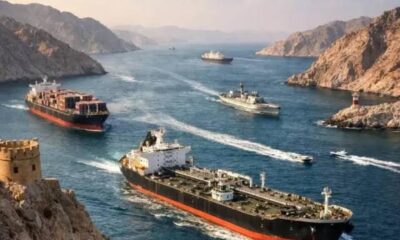
The first-ever container transit from China to Europe via the Northern Sea Route (NSR) arrived at the British port of Felixstowe on October 13, 2025. The voyage marked a breakthrough in developing the NSR as a sustainable and high-tech transport corridor connecting Asia and Europe. The development of this Arctic route reflects the steady expansion of global trade flows — an evolution that reaches every continent, including Africa, where maritime industries and energy corridors continue to expand.
The ship carrying nearly 25,000 tonnes of cargo departed from Ningbo on September 23 and entered the NSR on October 1. Navigation and information support was provided by Glavsevmorput, a subsidiary of Rosatom State Atomic Energy Corporation. The Arctic leg of the voyage took 20 days, cutting transit time almost by half compared with traditional southern routes. This new pathway complements existing ones, creating broader opportunities for efficient and sustainable logistics worldwide.
The Northern Sea Route is developing rapidly, becoming a viable and efficient global logistics route. This is facilitated by various factors, including the development of advanced technologies, the construction of new-generation nuclear icebreakers, and growing interest from international shippers. Working in the Arctic is challenging but we are transforming these challenges into results. Along with the main priority of ensuring the safety of navigation on the Northern Sea Route, managing the speed and time of passage along the route is becoming an important task for us today,” noted Rosatom State Corporation Special Representative for Arctic Development Vladimir Panov.
The Northern Sea Route, spanning about 5,600 km, links the western part of Eurasia with the Asia-Pacific region. In 2024, cargo turnover reached 37.9 million tonnes, surpassing the previous year’s record by more than 1.6 million. Container traffic between Russia and China doubled compared to 2023, and by mid-2025, 17 container voyages had already been completed, moving 280,000 tonnes — a 59% increase year-on-year.
The expansion of this Arctic transport route is becoming part of a broader global effort to strengthen connectivity and diversify supply chains. For Africa and the wider Global South these developments demonstrate how innovation in logistics can stimulate new opportunities for trade, technology exchange, and sustainable growth. As new corridors emerge, the world’s regions are becoming more closely linked — not in competition, but in collaboration — shaping a more resilient and interconnected global economy.
-
News3 days agoNigeria to officially tag Kidnapping as Act of Terrorism as bill passes 2nd reading in Senate
-
News3 days agoNigeria champions African-Arab trade to boost agribusiness, industrial growth
-
News3 days agoFG’s plan to tax digital currencies may push traders to into underground financing—stakeholders
-
Finance1 week agoAfreximbank successfully closed its second Samurai Bond transactions, raising JPY 81.8bn or $527m
-
News1 week agoFG launches fresh offensive against Trans-border crimes, irregular migration, ECOWAS biometric identity Card
-
Economy3 days agoMAN cries out some operators at FTZs abusing system to detriment of local manufacturers
-
News3 days agoEU to support Nigeria’s war against insecurity
-
Uncategorized3 days agoDeveloping Countries’ Debt Outflows Hit 50-Year High During 2022-2024—WBG