
Maritime
Standardised digital communication key to effective Port, Flag administration—Jamoh

The Director General of the Nigerian Maritime Administration and Safety Agency, NIMASA Dr Bashir Jamoh, OFR, says international collaboration to attain standardised digitalisation is essential for Maritime Administrations across the world and all stakeholders in the maritime sector to effectively communicate in line with provisions of the International Maritime Organisation IMO, and the International Association of Marine Aids to Navigation and Lighthouse Authorities, IALA. Dr Jamoh who stated this while speaking at the launch of Denmark’s first commercial satellite, Sternula-1, in Aalborg, Denmark said that NIMASA is participating in the testing stage of an international satellite system that would improve communication channels for vessels at sea as part of the current Management’s quest to ensure adoption of global best practices in the Nigerian maritime sector. He noted that the IMO set the requirements for the e-Navigation strategy implementation plan while, IALA develops the technical solutions such as AIS as part of measures to ease and promote digital communication in the Maritime Industry.
According to him, “Ultimately, seaborne transport depends on a secure and trustworthy flow of information. In this new reality, access to quality data is essential for ship managers to make decisions, act on market opportunities, and meet new requirements. A well digitalised system leads to faster access to information, improved customer experience, increased productivity, lower operational costs, improved decision making, improved information security, higher mobility, and automation of business processes amongst others”. In the Port Sector, Jamoh noted that Digitalisation is the foundation of Smart Ports and Digital Twins, both technological tools and solutions that can transform real-time data into accurate and more precise business decisions, rendering port operations extremely effective as it interconnects all sectors of the maritime supply chain.
While noting that digitalisation transforms organisations from reactive to being proactive in areas such as safety and safety reporting, the NIMASA DG said that there are massive untapped potentials for the shipping industry to improve its operational efficiency through harnessing ship-to shore data flows that can positively impact commercial, environmental and safety performance reporting processes. It will be recalled that NIMASA, in the third quarter of 2022, had signed a Letter-of-Intent with the Danish telecoms company Sternula, on participation in the Worldwide AIS 2.0 Demo Project that will allow for early testing of digital services over the satellite-based AIS 2.0 at the beginning of 2023. Sternula-1 and the built-in AIS 2.0 technology, also called VDES, is a new communication solution to implementing a global e-Navigation strategy. AIS 2.0 is an extension to AIS, adding two-way data channels over VHF by using special satellite channels which means that every ship with a VHF antenna will be able to communicate globally.
-
 Oil and Gas2 days ago
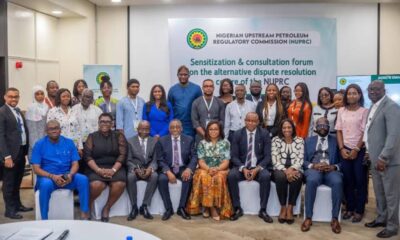
NUPRC vows not to approve divestments that doesn’t meet considerations
-

 Oil and Gas2 days ago
Iran eases Strait of Hormuz transit rules amid oil shock
-

 Finance2 days ago
Cardoso seeks collaboration to check cross‑border financial risks
-

 Economy2 days ago
Nigeria to launch trade platform at ports as part of reform push
-

 Finance2 days ago
Court nullifies CBN’s regulatory intervention in Union Bank in 2024, rules it acted beyond its powers
-

 Oil and Gas2 days ago
Court orders forfeiture of $13m linked to Aisha Achimugu’s firm
-

 Oil and Gas2 days ago
Oil falls as reports of 15-point proposal spurs ceasefire hopes