
Economy
Tariff-free trade: Nigeria, UAE sign deal

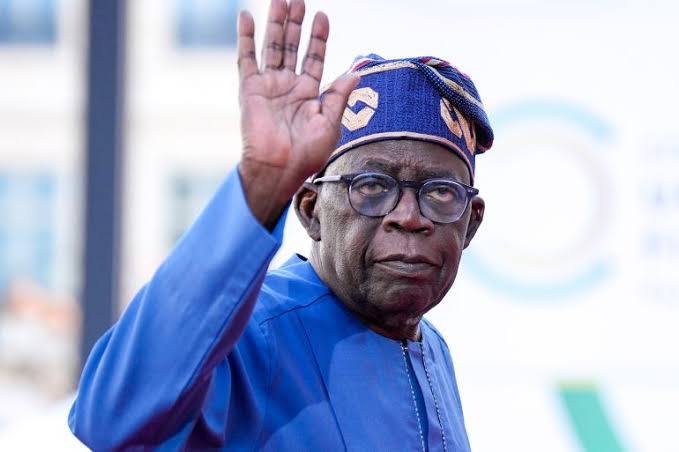
Federal Government signed a Comprehensive Economic Partnership Agreement (CEPA) with the United Arab Emirates (UAE) to remove tariffs on some products.
Rep. Sam Onuigbo a member of the Governing Board of the North East Development Commission in an interview with the News men in Abuja on Tuesday said that the game changer in Abu Dhabi was CEPA which Nigeria signed with UAE at the Abu Dhabi Sustainability Week which took place from Jan. 11–15.
Onuigbo was a member of the House of Representatives of Nigeria who represented Ikwuano/Umuahia North and South Federal Constituency and served as Chairman of the Committee of Climate Change in the House of Representatives of Nigeria during the 8th Assembly.
“The CEPA signed in January 2026, the UAE will eliminate tariffs on 7,315 Nigerian products. This includes immediate duty-free access for 2,805 products (38.3 per cent), with the remainder phased out over three to five years, covering agricultural and industrial goods.
“Similarly, under the Nigeria/UAE CEPA also signed in January 2026, Nigeria has eliminated tariffs on 6,243 products imported from UAE. That agreement creates these wonderful opportunities between Nigerians, the Emirates,” he said.
Onuigbo said that the agreement is massive and would facilitate an environment for business persons in Nigeria, who have businesses that are verifiable, identifiable, to go over there and open offices also to work there for three months and come back.
He commended President Bola Tinubu for the agreement, saying that the agreement was geared and targeted towards how to reposition Nigeria, create the enabling environment for employment, and of course make everybody happy.
“Nigeria is ready for business. Nigeria’s carbon market framework policy was unveiled again there in Abu Dhabi. Nigeria is a nation of nearly 250 million people and has had, over the years, the challenge of enough energy or power to be able to attain its economic and industrialisation targets.
“And because of that, Nigeria has been engaging in different activities, for instance, the Energy Transition Plan, enactment of the Climate Change Act, the Electricity Act which the President signed barely eight days after he assumed office in 2023.
“This shows the importance of addressing the energy gap having enough energy, electricity is a fundamental point to developing industrially which nigeria deems necessary.
Onuigbo lauded Nigeria’s participation at the Abu Dhabi summit saying that the summit would further enable global economic opportunity for people to work together within Nigeria and UAE.
He added that the President’s collaboration would address the challenges and devastating effects of climate change as well as to build up Nigeria’s economy in 2026.
-

 News2 days ago
Binance seeks out-of-court settlement with Nigeria over alleged tax evasion
-
 Oil and Gas1 day ago
NUPRC vows not to approve divestments that doesn’t meet considerations
-
 Stock Market2 days ago
NGX market capitalisation settle at N128.84tn, cuts Zichis Agro-Allied share price by 50%
-
 News2 days ago
Power crisis blamed on gas shortages, sector debts
-
 News2 days ago
FG shortlists 65 student innovators for venture capital grant
-

 Economy2 days ago
FG urges PenCom board on governance, protection of pension assets
-
 Oil and Gas2 days ago
Dangote warns of prolong global oil shocks
-

 Oil and Gas1 day ago
Iran eases Strait of Hormuz transit rules amid oil shock