
Oil and Gas
U.S. energy agency raises crude oil price forecast, Heirs Energy strike flare-gas deals to curb emissions, boost energy

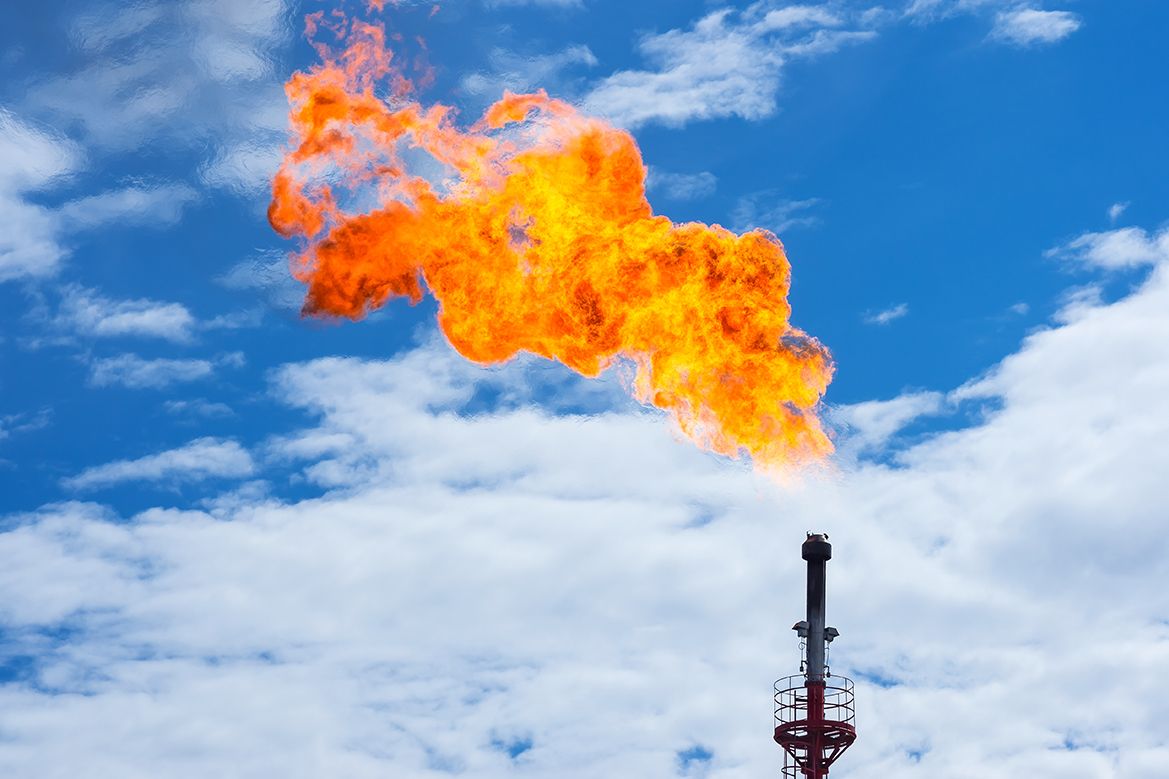
U.S. Energy Information Administration (EIA) has revised up its average oil price projections for this year and 2026, taking into account recent developments in global oil markets as Heirs Energies NNPC said they had signed agreements with five investors to capture and monetise gas that would otherwise be wasted through flaring, where the fuel is burned in the open as
In its Short-Term Energy Outlook (STEO) released late Tuesday, the EIA raised its 2025 and 2026 average Brent crude price forecast to $68.91 per barrel, up from $68.76, while West Texas Intermediate (WTI) was revised to $65.32 per barrel from $65.15
For 2026, EIA projects Brent crude to average $55.08 per barrel and WTI to average $51.42 per barrel. In its previous outlook, the agency had estimated prices at $54.92 and $51.26 per barrel, respectively.
The agency said that crude oil prices continue to fall as growing crude oil production outweighs the effect of increased drone attacks on Russia’s oil infrastructure and the latest sanctions on Russia’s oil sector.
EIA forecasts that growing global oil production and lower demand over the winter months will accelerate the accumulation of oil inventories, resulting in further crude oil price declines in the coming period.
Meanwhile, although the agency expects prices to fall in 2026, it assesses that OPEC+ policy and China’s continued inventory builds will limit the declines.
US crude oil output is forecast to average 13.61 million bpd in 2025, up from the 13.59 million barrels projected in the previous report.
For 2026, production is expected to average 13.53 million bpd, compared to the earlier estimate of 13.58 million barrels. Meanwhile, global oil production is forecast to average 106.18 million bpd in 2025 and 107.43 million bpd in 2026. Consumption is estimated to reach 103.94 million bpd in 2025 and 105.17 million bpd in 2026. # US Energy Agency Raises Oil Price Forecast
Nigeria holds Africa’s largest proven gas reserves and is betting on gas to drive industrial growth and cut emissions. Its Decade of Gas policy aims to boost domestic supply, reduce flaring and expand LNG exports. But recent World Bank data show flaring rose 12% in 2024, underscoring the challenge.
The deals, part of a broader effort by Nigerian operators to reduce greenhouse gas emissions and boost domestic supply, cover about 18 million standard cubic feet per day (MMscf/d) of gas across Oil Mining Lease 17, operated by Heirs Energies.
Last year, Nigeria flared gas — where it is burned off rather than captured or used to generate power — worth $1.05 billion, emitting an estimated 16 million tonnes of CO2, government data shows, despite pledges to end routine flaring. ”Gas sits at the heart of Nigeria’s development journey,” said Heirs Energies CEO Osa Igiehon, adding: “We are converting waste into value, strengthening domestic energy supply and supporting responsible operations across OML 17”.
Analysts cite infrastructure gaps, payment risks in the power market and financing constraints after divestments by international oil companies as hurdles to progress in Nigeria and although regulators imposed $602 million in fines for flaring last year, enforcement remains weak.
Nigeria’s government has re-launched its gas flare commercialisation programme and set decarbonisation targets for new leases, but execution has been uneven.
Earlier this week, Renaissance Africa Energy, which bought Shell’s onshore assets in Nigeria, launched a flare-reduction project to gather associated gas from Niger Delta oilfields and route it into pipelines to feed the country’s domestic network and Nigeria LNG’s Bonny plant. Renaissance said the project will add around 100 MMscf/d.
-

 Oil and Gas1 day ago
NUPRC vows not to approve divestments that doesn’t meet considerations
-

 Finance1 day ago
Cardoso seeks collaboration to check cross‑border financial risks
-

 Oil and Gas1 day ago
Iran eases Strait of Hormuz transit rules amid oil shock
-

 Oil and Gas1 day ago
Court orders forfeiture of $13m linked to Aisha Achimugu’s firm
-

 Oil and Gas1 day ago
Oil falls as reports of 15-point proposal spurs ceasefire hopes
-

 Economy1 day ago
Nigeria to launch trade platform at ports as part of reform push
-

 Finance1 day ago
Court nullifies CBN’s regulatory intervention in Union Bank in 2024, rules it acted beyond its powers