
Agriculture
Stop financing factory farms, focus on agroecology – Coalition

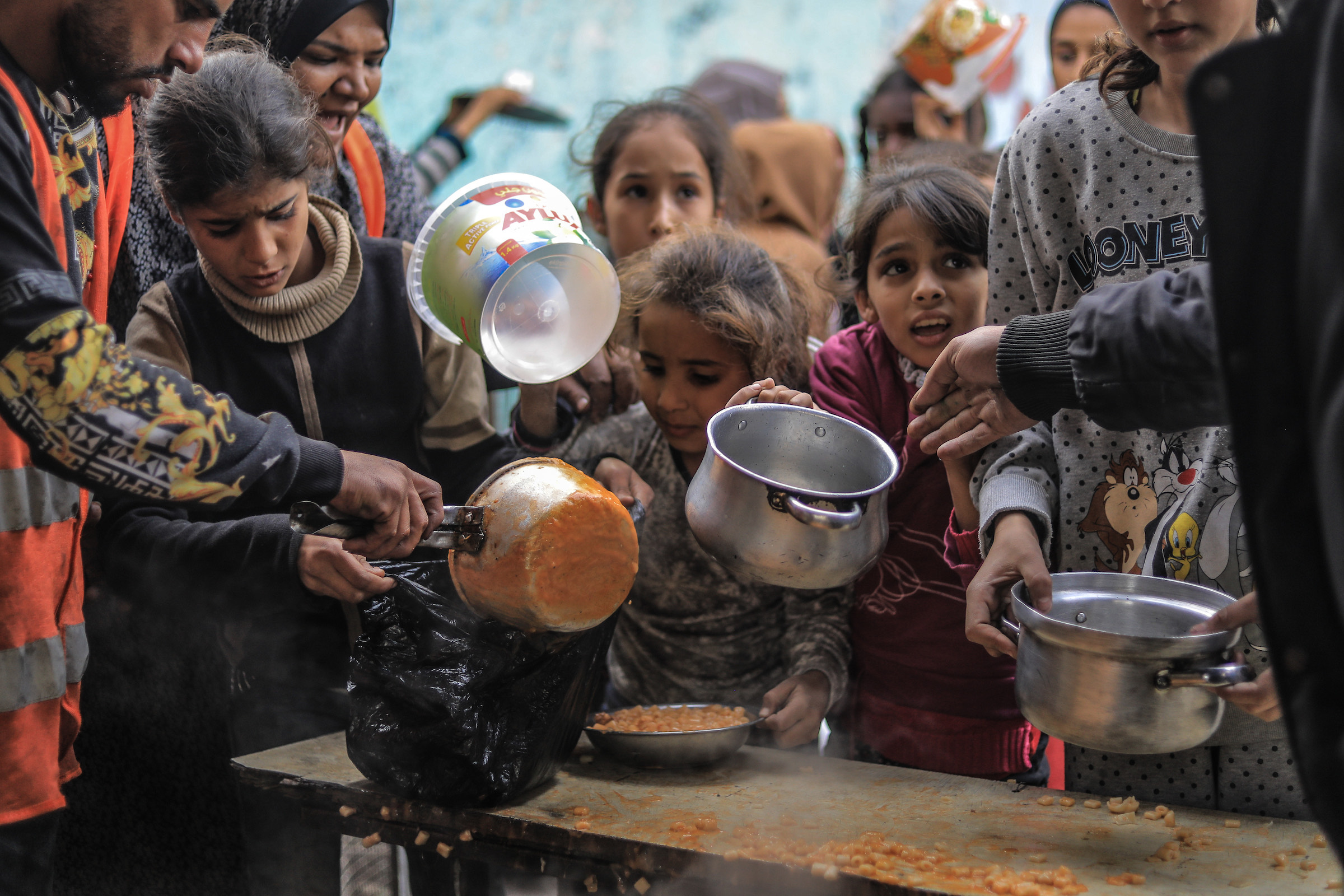
Ahead of the International Conference on Agrarian Reform and Rural Development, ICARRD+20, in Cartagena, Colombia, a Coalition under the auspices of Stop Financing Factory Farming (S3F) Campaign, Monday, called on governments and development partners to halt funds for expanding factory farms following huge contributions made to climate change impacts.
The call was contained in a statement issued by the Coalition, where it also advocated a shift in global development finance to end financing for industrial livestock, and “redirect resources toward agroecology and equitable food systems.”
The Stop Financing Factory Farming Campaign is calling on governments and multilateral development banks participating in ICARRD+20 to: End public and multilateral financing for industrial livestock and factory farming projects; Conduct transparent reviews of existing agricultural investment portfolios;Redirect financing toward agroecology and community-led, small-scale food systems.
Align agricultural investments with climate, biodiversity, and human rights commitments; Guarantee meaningful participation of grassroots movements, women, youth, small-scale farmers and producers, and Indigenous Peoples in agricultural financing decisions.
They pointed out that agrarian reform cannot succeed without transforming how development finance is structured and deployed. Development banks cannot credibly champion rural equity while funding systems that accelerate land concentration, environmental degradation, and social inequality.
According to the Coalition, 20 years after the first ICARRD, land inequality, rural dispossession, and ecological decline remain urgent global challenges. Development finance continues to shape land use, agricultural systems, and rural livelihoods and too often, it is reinforcing the very crises agrarian reform seeks to resolve.
Meanwhile, S3F Africa Regional Coordinator, Mariann Bassey-Olsson, noted that development finance is far from neutral, while pointing out that industrial livestock is driving deforestation.
“Public and multilateral development bank financing of industrial livestock is driving deforestation, land conversion for feed production, and land concentration.
“These investments directly undermine climate goals, biodiversity protection, and the vision of sustainable rural development”, Bassey-Olsson said.
The Coalition also argued that industrial livestock production relies heavily on monoculture feed production, accelerates forest destruction, increases greenhouse gas emissions, and subjects billions of animals to intensive confinement and chronic suffering, while entrenching export-oriented agribusiness models.
Rather than supporting equitable land distribution and community resilience, such financing consolidates corporate control over land and food systems.
They also opposed multilateral development banks for claiming that their financing of industrial livestock production boosts food security.
However, the Coalition noted that industrial production is dependent on feeding grains such as wheat and corn to animals who convert these crops very inefficiently into meat and milk.

Adding that this undermines food security while referring to a new report, which showed that if the grain fed to livestock were instead used for direct human consumption, worldwide an extra 2 billion people could be fed each year.
The Coalition alleged that across Africa and Latin America, including Colombia, the host of ICARRD+20, communities continue to resist land grabbing, ecological destruction, and rural decline linked to industrial agriculture expansion.
In a remark, the S3F Youth, Policy & Campaigns Lead, Opeyemi Elujulo, asserted that industrial livestock systems are also reshaping rural economies in ways that deepen inequality.
Elujulo said, “Factory farming concentrates ownership and decision-making power in the hands of large agribusiness corporations, displacing small-scale producers and Indigenous landowners.
“Women, youth, and marginalized communities bear the heaviest burden. This is not rural development, it is rural dispossession.”
According to the Coalition, in many regions, industrial livestock expansion is promoted as modernization or food security.
However, grassroots movements and smallholder farmers consistently highlight its damaging social and environmental consequences. The expansion of these systems undermines local food sovereignty, increases dependency on global commodity chains, and weakens community resilience.
ICARRD+20 presents a critical opportunity to realign development finance with its stated goals of reducing rural poverty, supporting agrarian reform, and advancing sustainable development.
The S3F Latin America Regional Coordinator, Claudia Escorza, called for redirection of financial flows that can transform land outcomes and rural futures.
“Shifting public finance away from factory farming toward agroecological and diversified food systems supports more equitable land use, strengthens resilient rural livelihoods, and aligns with climate and biodiversity commitments.
“Public money must serve the public good, not corporate concentration”, Escorza added.
They maintained that agroecology and diversified food systems offer proven pathways that support small-scale farmers, protect land rights, and strengthen local markets, saying, across regions, agroecological approaches have demonstrated increased climate resilience, improved soil health and fertility, enhanced biodiversity, reduced input costs, and greater income stability for farming communities.
Evidence from multiple regions shows that agroecological systems can maintain – and often improve – yields while reducing dependency on costly external inputs, thereby boosting farmers’ incomes and livelihoods.
-

 News19 hours ago
Cardoso formally receives Central Bank of the Year Award
-

 Economy19 hours ago
Nigeria’s Digital Boom needs nuclear power partnerships for long-term success
-
Uncategorized19 hours ago
June 12 Democracy Day declaration not enough, as citizens wallow in pain – ActionAid, FG declares Friday public holiday
-
 Oil and Gas19 hours ago
NNPC is house of thieves, fraud; Kyari must be arrested dead or alive to account for N210 trillion—Oshiomhole
-

 Oil and Gas19 hours ago
Dangote Refinery seeks $1bn private placement ahead of planned listing
-
 News19 hours ago
Middle East Conflict sends global growth to lowest rate since COVID-19, WBG to Provide up to $100bn for Affected countries over 15 Months—WBG
-

 News19 hours ago
High cost of cooking gas‘ll negatively impact environment, health, CPPE warns