
Economy
FG raises 2026 borrowing plan to N29.20 trn as deficit widens

Federal Government has raised its borrowing plan for 2026 to N29.20 trillion following an expansion in the proposed budget size and fiscal deficit.
The new borrowing figure represents an increase of N11.31 trillion compared to the earlier projection of N17.89 trillion contained in the 2026 Abridged Budget Call Circular issued in December 2025.
The updated estimate is captured in the 2026 Appropriation Bill approved by the National Assembly and detailed in the House of Representatives’ Order Paper dated March 31, 2026.
The revised borrowing plan reflects a sharp increase in the fiscal deficit, now estimated at N31.46 trillion. Total government expenditure is projected at N68.32 trillion, while revenues are expected to reach N36.87 trillion.
This gap between spending and revenue has driven a higher reliance on debt financing, with borrowing accounting for the bulk of deficit funding.
Other financing sources remain relatively small, including N189.16 billion expected from asset sales and privatisation, and N2.05 trillion from multilateral and bilateral project-tied loans.
The earlier borrowing estimate of N17.89 trillion was based on a lower deficit projection of N20.12 trillion, indicating a significant upward revision in both deficit and financing needs.
Government revenue for 2026 is projected at N36.87 trillion, supported by federation revenues, independent income, and earnings from government-owned enterprises.
A breakdown shows that N25.92 trillion is expected from federation revenues, N4.31 trillion from independent revenues, and N5.85 trillion from government enterprises. Additional inflows include N1.37 trillion in grants and aid, alongside N300 billion from special funds.
Despite the improvement in revenue projections, expenditure growth has outpaced gains, contributing to the wider deficit and increased borrowing requirement. Debt service remains a major pressure point

On the spending side, debt service is projected at N15.81 trillion, making it one of the largest components of the budget.
Recurrent non-debt expenditure is estimated at N15.43 trillion, while capital expenditure is projected at N32.29 trillion, reflecting a strong allocation to infrastructure and development projects. Statutory transfers are expected to total N4.80 trillion.
Further analysis shows that domestic debt service will account for N10.16 trillion, while foreign debt obligations are projected at N5.36 trillion, highlighting the rising cost of servicing both local and external borrowings.
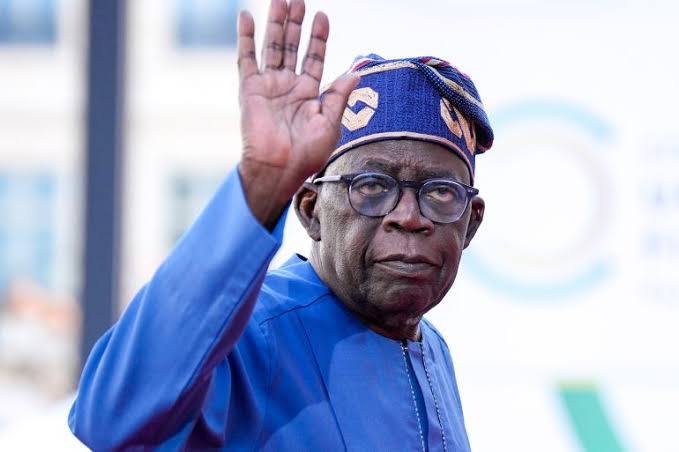
President Tinubu earlier asked the Senate’s approval to increase the 2026 appropriation bill by N9 trillion, raising the total budget from N58.4 trillion to N67.4 trillion.
The request was conveyed in a letter addressed to the Senate President, Godswill Akpabio, and read at plenary on Tuesday.
To finance the expanded 2026 budget, lawmakers proposed a mix of revenue measures alongside increased borrowing to close the financing gap.
A key component of the plan is a $10 per barrel increase in the oil benchmark, which is expected to generate about N2.592 trillion in additional revenue.
The lawmakers also pointed to stronger contributions from the telecommunications sector, driven by recent tariff adjustments and broader policy reforms. Projections show that MTN Nigeria could generate N724 billion in company income tax in 2026, while Airtel Nigeria is expected to contribute N150 billion, bringing total additional revenue from the sector to N874 billion.
Despite these revenue-boosting measures, lawmakers approved an increase in external borrowing by N6.163 trillion to bridge the shortfall, noting that the debt level remains within what they described as manageable limits.
With the revised framework, borrowing is set to account for the bulk of deficit financing, raising concerns over Nigeria rising debt burden.
-

 News18 hours ago
NTDA, China partner to attract more Chinese tourists to Nigeria
-

 News18 hours ago
BRICS pushes local currency trade to cut transaction costs
-

 Finance17 hours ago
Subscribe to Dangote Refinery shares through Zenith Bank
-
 Finance18 hours ago
PAPSS) targets accelerated adoption, transaction growth as network expands across Africa
-

 Maritime17 hours ago
Aquatic life restored in Ogoni creeks—FG
-
 News17 hours ago
AD Consulting, Ecobank bring Nigeria’s art, architecture icons together in “The Convergence”