
Business
Manufacturers seek policies to boost industry resilience amid global supply disruptions


The Pan-African Manufacturers Association (PAMA) has called for urgent policy measures to strengthen industrial resilience against global supply disruptions amid rising geopolitical tensions.
The call was contained in a statement issued on Sunday by PAMA president, Mansur Ahmed.
It followed the temporary disruption of the Strait of Hormuz, a critical energy corridor, which exposed structural weaknesses in Africa’s manufacturing sector.
Although the strait has reopened, Mr Ahmed said the episode underscored the need for long-term policies to safeguard industrial growth across the continent.
He said that the disruption, through which about 20 per cent of global oil passes, triggered spikes in energy costs, freight charges and input prices.
Mr Ahmed added that the blockage constrained exports and contributed to shortages and rising prices of urea, a key agricultural input.
“Beyond fertilisers, several plastic manufacturers have reported supply challenges due to reliance on petrochemical derivatives and crude oil by-products.
“Consequently, the disruption has created ripple effects across supply chains, affecting industrial production in Africa and exposing vulnerability to external shocks,” he said.
Mr Ahmed said developing domestic refining capacity and strategic petroleum reserves should be prioritised to cushion future disruptions.
According to him, boosting local refining would stabilise supply and reduce dependence on volatile imported petroleum products during global crises.

He stressed the need for stronger backward integration and regional value chains to reduce reliance on imported industrial inputs.
“African economies must reduce dependence on imported inputs by strengthening backward integration, regional manufacturing networks and local value chains,” he said.
Mr Ahmed also called for improved transport infrastructure, including ports, roads and trade corridors, to lower logistics costs and enhance supply chain efficiency.
He said efficient logistics would enable manufacturers to respond more effectively to disruptions and remain competitive in regional and global markets.
The PAMA president urged expansion of domestic production of fertilisers, petrochemicals, steel and industrial chemicals to reduce exposure to external shocks.
“Expanding domestic production of key inputs will help reduce vulnerability to external supply shocks,” he said.
Mr Ahmed also advocated stronger patronage of locally made goods to sustain production during periods of global uncertainty.
He urged governments, private-sector stakeholders, and regional institutions to collaborate to build a more self-reliant manufacturing sector.
“While global crises are inevitable, their impact can be minimised through coordinated and forward-looking policy actions.
“The development of domestic refineries and strategic oil reserves is critical to guard against future energy supply shocks,” Mr Ahmed added.
(NAN)
-

 News17 hours ago
Cardoso formally receives Central Bank of the Year Award
-

 Economy17 hours ago
Nigeria’s Digital Boom needs nuclear power partnerships for long-term success
-
Uncategorized17 hours ago
June 12 Democracy Day declaration not enough, as citizens wallow in pain – ActionAid, FG declares Friday public holiday
-

 Oil and Gas18 hours ago
NNPC is house of thieves, fraud; Kyari must be arrested dead or alive to account for N210 trillion—Oshiomhole
-
 Oil and Gas18 hours ago
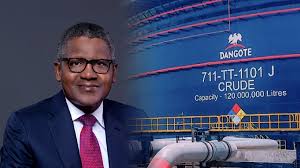
Dangote Refinery seeks $1bn private placement ahead of planned listing
-

 News17 hours ago
Middle East Conflict sends global growth to lowest rate since COVID-19, WBG to Provide up to $100bn for Affected countries over 15 Months—WBG
-

 News17 hours ago
High cost of cooking gas‘ll negatively impact environment, health, CPPE warns