
Economy
Nigeria debt-service-to-revenue ratio, remains critically elevated–NBS

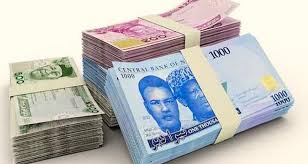
Nigeria National Bureau of Statistics (NBS) has said that the Nigerian Domestic and Foreign Debt Report for Q4 2025, stands at a total public debt stock of N159.28 trn ($110.97 bn), a 3.90% increase from N153.29 trn in Q3 2025, and N14.6 trn above the N144.67 trn recorded in Q4 2024.
Nigeria’s debt-to-GDP ratio which stood at 39.3% in 2024, remains well below the IMF’s 55% distress threshold, and the IMF’s April 2026 Fiscal Monitor projects a further decline to 32.3% by 2026. Yet the headline ratio tells an incomplete story.
The more structurally revealing metric; the debt-service-to-revenue ratio, remains critically elevated at an estimated 113% in Q1 2025 as reported in Macroeconomic Condition Index report by Nigerian Economic Summit Group (NESG), indicating that debt obligations continue to exceed all federal revenue earned in a given period.
This economic note unpacks the Q4 2025 debt data across four analytical lenses: composition and trajectory, fiscal sustainability, subnational dynamics, and forward implications for macroeconomic policy and investor positioning.
At the end of Q4 2025, domestic debt of N84.85trn constituted 53.37% of total public debt, while external obligations of N74.43trn accounted for the remaining 46.73%. This split reflects the Federal Government’s deliberate tilt toward external financing as domestic borrowing costs remain elevated in the wake of the CBN’s hawkish monetary stance.
Domestic debt is predominantly composed of FGN Bonds, Treasury Bills, and CBN Promissory Notes. The high stock of rollover-
intensive instruments amplifies refinancing risk. On the external side, the portfolio blends multilateral concessional loans (World
Bank IDA, AfDB, IMF), bilateral obligations (China EXIM, France AFD), and commercial instruments including Eurobonds, which
as of 2024 stood at about $18.55 bn— roughly 35.77% of total external debt.
Nigeria’s public debt stock has more than tripled since Q1 2023, rising from N49.85 trn to N159.28 trn by Q4 2025, a N109 trillion expansion in under three years. The drivers have shifted across the period. In 2023–2024, the CBN’s naira’s unification policy which collapsed the official rate from N899/$ to N1,535/$ was the dominant force, mechanically inflating the naira value of external obligations.
In 2025, the dynamic reversed as naira appreciated into the N1,400s in Q3 2025, Despite this FX tailwind, the N14.6 trillion year-on-year increment reflects pure structural borrowing pressure— external debt alone grew by $6.07 bn in
Nigeria’s debt-to-GDP ratio of approximately 32–35% is frequently cited by government spokespersons and IMF projections to
argue that Nigeria’s debt load is manageable by international standards. The IMF’s April 2026 Fiscal Monitor projects Nigeria’s
ratio declining from 35.5% in 2025 to 32.3% in 2026, before settling at approximately 33.1% in 2027 and 30.1% by 2031. These
projections incorporate the positive effect of the NBS GDP rebasing exercise, which meaningfully enlarged the denominator.
However, the GDP ratio is not the primary stress variable for Nigeria’s fiscal condition. The country’s revenue base, not the size
of its economy, is the binding constraint on debt sustainability, and it is structurally undersized relative to African peers.
-

 News20 hours ago
Cardoso formally receives Central Bank of the Year Award
-

 Economy20 hours ago
Nigeria’s Digital Boom needs nuclear power partnerships for long-term success
-
Uncategorized20 hours ago
June 12 Democracy Day declaration not enough, as citizens wallow in pain – ActionAid, FG declares Friday public holiday
-

 Oil and Gas20 hours ago
NNPC is house of thieves, fraud; Kyari must be arrested dead or alive to account for N210 trillion—Oshiomhole
-

 Oil and Gas20 hours ago
Dangote Refinery seeks $1bn private placement ahead of planned listing
-
 News20 hours ago
Middle East Conflict sends global growth to lowest rate since COVID-19, WBG to Provide up to $100bn for Affected countries over 15 Months—WBG
-

 News20 hours ago
High cost of cooking gas‘ll negatively impact environment, health, CPPE warns