
Maritime
SEREC accountability in port charges, operational delays

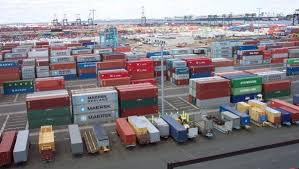
Sea Empowerment and Research Centre (SEREC) has called for transparent port charges, accountable operators and a regulatory system where responsibility for delays follows the party that caused them.
SEREC’s head of research, Eugene Nweke, made the call in an industry bulletin on Monday in Abuja, addressing port charges, operational delays and the cost of doing business.
Mr Nweke said the reported N6,000-per-container charge and alleged N178 million refund demand, alongside empty-container challenges, required proper regulatory investigation. He said the allegations should not be treated as facts until competent authorities verified the claims and determined the legality of the charges.
The controversy followed a demand notice dated August 6 by the National Association of Government Approved Freight Forwarders over alleged charges at bonded terminals. NAGAFF alleged that some terminals collected N3,000 on 20-foot containers and N6,000 on 40-foot containers, with about N178 million reportedly involved.
The association demanded documentary evidence establishing the legal authority for the charges and sought a refund of the alleged collections.
NAGAFF also issued a seven-day ultimatum to affected terminals, demanding clarification and threatening further regulatory and legal action if its demands were not addressed.
The SEREC head of research, however, said the allegations required evidence-based determination, including establishing who introduced the charge, what service it represented and who received the proceeds.
He recommended immediate regulatory fact-finding and documentary audits of relevant invoices, receipts, transaction records and payment trails to establish the facts surrounding the reported charges.
Mr Nweke cautioned that no compulsory cargo-related charge should be collected without a valid regulatory, statutory, contractual or approved commercial basis.
He called for electronic billing and receipting of legitimate terminal charges to improve transparency, traceability and accountability within the port system.

On empty-container challenges, the SEREC official urged shipping lines to maintain adequate receiving arrangements and recommended a detention causality protocol.
According to him, the review should apply where documented service-provider or facility constraints prevent customers from returning empty containers.
He also recommended that truck waiting and turnaround times become formal port-performance indicators to improve efficiency and reduce avoidable costs.
He urged the Council for the Regulation of Freight Forwarding in Nigeria and recognised professional associations to establish a ‘Professional Code of Port Conduct’.
Mr Nweke further called on the Association of Nigerian Licensed Customs Agents (ANLCA), NAGAFF and other recognised associations to establish a joint platform for resolving systemic industry challenges.
He recommended a clear implementation roadmap for the Nigerian Ports Economic Regulatory Agency (NPERA), with defined institutional mandates, stakeholder consultation and measurable implementation milestones.
He proposed an annual Port Economic Performance Report covering tariff trends, cargo dwell time, truck turnaround, complaints, disputed charges, refunds and detention disputes.
According to him, where an importer, freight forwarder, shipping line, terminal or regulator causes a delay, responsibility for the legitimate consequence should follow the cause.
“Nigeria should move from tariff control to cost accountability, from complaint management to performance regulation; and from fragmented interests to coordinated port governance,” he said.
-

 Finance1 day ago
Union Bank of Nigeria attains PCI DSS v4.0.1 certification
-

 News1 day ago
Wike signs 26,272 Cs of O in 3yrs—FCTA
-

 News1 day ago
RMAFC completes revenue formula, remuneration review
-

 News34 minutes ago
FG, Meta plan AI academy to train Nigerian talents
-

 News29 minutes ago
FG adds 208 MW transmission capacity to boost industries in Lagos
-

 Agriculture24 minutes ago
NSDC targets sugar self-sufficiency with $1bn investment, N10bn fund
-

 News22 minutes ago
BudgIT impacts 22m citizens through fiscal transparency
-

 Finance19 minutes ago
TAJBank’s PBT rises by 74%, assets grew to N1.34 trn in 2025