
Industry
BOI, supported 12,501 businesses, created 1.68m jobs, to bring more long-term capital into industry—Olusi

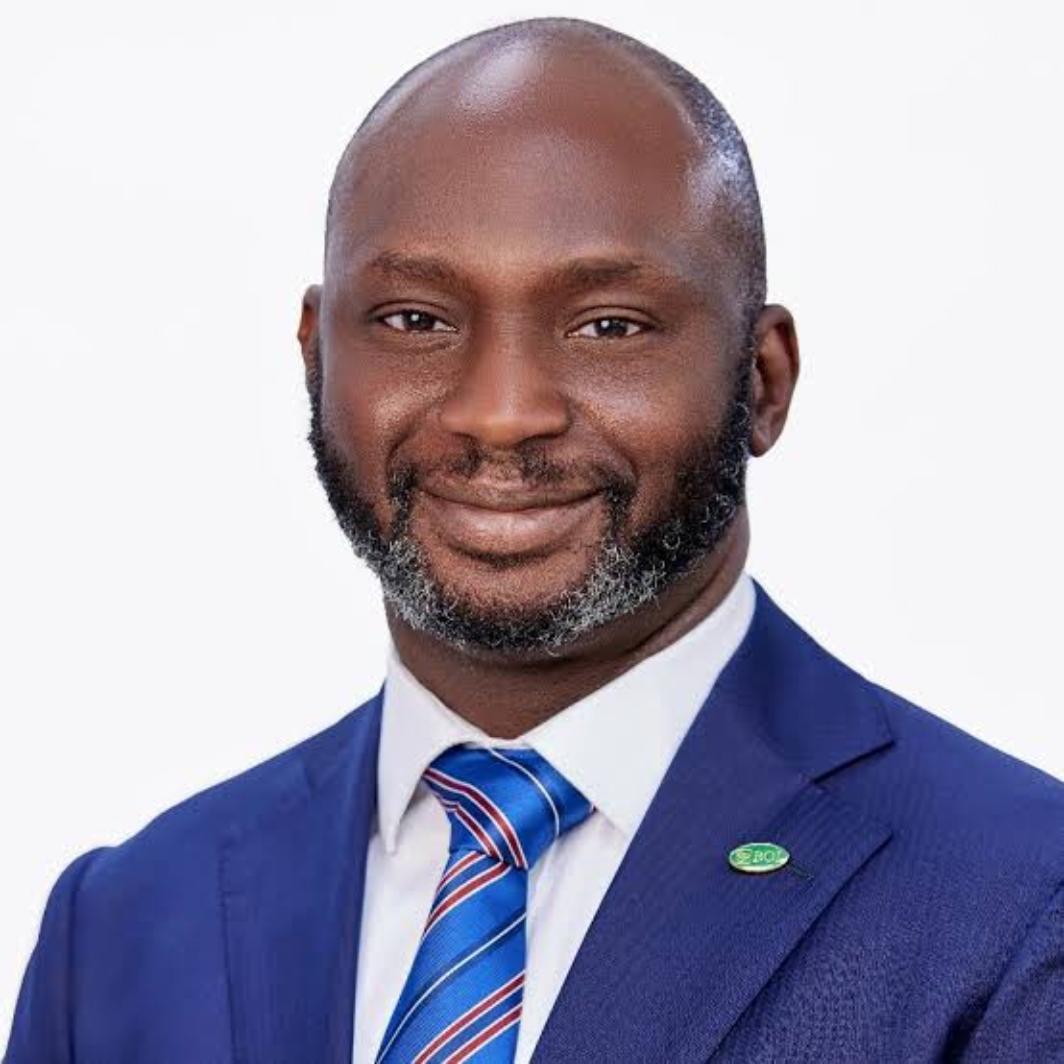
Managing Director Bank of Industry Dr. Olasupo Olusi.has said that the bank is working with the Federal Ministry of Industry, Trade and Investment on the National Industrial Finance Compact, to bring more long-term capital into industry. We will deploy our new European Investment Bank facilities into agriculture and local healthcare manufacturing, so that Nigeria produces more of the food and medicines it consumes.
Speaking to journalist in an interactive session in Lagos Dr. Olusi further said “We are now at the midpoint of our 2025–2027 Corporate Strategy, and this is a good moment to take stock. The results so far tell us our strategy is working. In 2025, we disbursed ₦644.9 billion, the highest amount ever by the Bank. This represented a 26% increase on the ₦510.9 billion we disbursed in 2024. That financing reached 12,501 businesses and created or supported 1.68 million jobs. We disbursed ₦120.9 billion to women-owned businesses alone.
“We are also on track across our thematic areas. MSMEs received 41% of our 2025 funding against our 35% target, and women and youth businesses received 20% each against our 15% and 20% minimum respectively. In infrastructure, we deployed over ₦108 billion, including 100 mini-grids to power businesses and households as well as broadband internet connectivity to over 700 communities.
“We also achieved our disbursement targets for Climate and Digital financing. For 2026, we are set to exceed our 2025 impact. To deliver this strategy and ensure inclusion along every sector of the Nigerian economy, we organised the Bank around 15 priority sectors, grouped into five divisions: ■ Agro Manufacturing: agro processing, food processing and beverages. ■ Other Manufacturing: engineering and light manufacturing, pharmaceuticals, and chemicals and industrial minerals.
He said “We will also grow our ICT and digital economy portfolio using the iDICE programme. Our mission is simple: finance what Nigeria makes, and create jobs for Nigerians. We cannot do it alone. We count on you to tell the stories of the businesses we finance, and to hold us to account.
Going down on memory lane He said “The Bank of Industry is Nigeria’s oldest and largest development finance institution. Our story began in 1959 as the Investment Company of Nigeria, which became the Nigerian Industrial Development Bank in 1964. In 2001, the Federal Government merged the Nigerian Industrial Development Bank, the Nigerian Bank for Commerce and Industry and the National Economic Reconstruction Fund to create the Bank of Industry.
“For more than six decades, our mandate has stayed the same: to finance the enterprises that build Nigeria’s industrial base and create jobs for Nigerians. Today we finance businesses of every size, from the woman processing cassava in her community to the large manufacturer exporting across Africa.
“In October 2023, President Bola Ahmed Tinubu appointed me the Managing Director and Chief Executive Officer of this Bank. His charge to me was clear. Every Nigerian enterprise, of every size and in every sector, must have fair and equitable access to the support it needs, with special attention to lower- and middle-income business owners, because that is where jobs and wealth are created.
“I came to the Bank after more than 20 years with the World Bank Group and the IFC, and as Economic Adviser at the Federal Ministry of Finance. I had seen what well-run development banks achieve in other countries, and I wanted BOI to set that standard in Nigeria. So, when I assumed office, I set four goals: Tie every naira we lend to measurable development impact: jobs, enterprises and output. Raise long-term capital at a scale that matches Nigeria’s industrial ambitions. Widen our reach to underserved segments: MSMEs, women, young people and rural enterprises. Strengthen our governance, risk management and balance sheet.

“Those four goals gave birth to our 2025–2027 Corporate Strategy. Our ambition in our 2025 – 2027 Strategy is to spearhead Nigeria’s sustainable and inclusive industrial development, through tailored offerings to underserved and high-impact business segments. Our 2X ambition meant to double our loan book, disbursements and impact instruments along these areas within 3 years.
“We built the strategy on six thematic areas. Each one carries a clear target, and we report our progress against each of them”. For MSME Finance, Small businesses are the backbone of our economy, so we have committed 35% of our funding to MSMEs.
Others are “Power, transport and logistics aimed at lowering the cost of doing business for every enterprise” and “We have dedicated a quarter of all our large credits to finance Infrastructure”. In the case of “Women and Gender it is a known fact that Women-owned businesses are among the most underserved in Nigeria. We will direct at least 15% of our financing to them”.
Similarly “We finance youth-owned enterprises and businesses that train and employ young Nigerians. We target 20% of our SME disbursements to Youth owned or run businesses. And for Climate and Sustainability We finance clean energy, climate-resilient businesses and the circular economy; 10% of our portfolio disbursements has been dedicated to this sector.
More importantly in “Digital Economy, “ we finance technology-led businesses and the digitisation of Nigerian enterprises. In our bid to take advantage of the 4th industrial revolution, 15% of our disbursements has also been dedicated to this sector. We are delivering the strategy in three phases. 2025 was our foundation year, when we put in place the governance, frameworks, products and digital tools the strategy needs. 2026 is the year of execution at scale, and 2027 is the year we consolidate our results and meet our targets.
Nigerian businesses need long-term, affordable capital, and the commercial banking system cannot provide enough of it. Filling that gap is our job. In three years, we have closed major funding transactions including: A €1.879 billion syndicated facility in 2024, named Syndicated Loan Deal of the Year, €210 million from international development partners in 2025, a ₦250 billion Development Bond in 2026, which was oversubscribed; €85 million from the European Investment Bank for agriculture in 2026 and €50 million from the European Investment Bank for healthcare manufacturing in 2026.
“Together, that is more than €2.2 billion and ₦250 billion in new funding for Nigerian industry. Investors have placed this money with us because they trust our governance, our pipeline and our results. The Federal Government also entrusted us with its ₦200 billion intervention, made up of a ₦50 billion Presidential Conditional Grant Scheme, a ₦75 billion MSME Intervention Fund and a ₦75 billion Manufacturing Sector Fund. We have delivered more than 95% of it, reaching 957,400 grant beneficiaries, 9,000 MSMEs and 104 large manufacturers.
“Our reach extends well beyond the cities. Through our RAPID programme, we disbursed ₦6.5 billion to 880 rural enterprises across all 36 states and the FCT, supporting more than 8,000 jobs. We financed 100 mini-grids that connected 11,777 households and businesses to electricity, many of them for the first time. We also disbursed about ₦213 billion to agro-allied businesses and linked 47,508 smallholder farmers to processors.
-

 News1 day ago
Misinformation, false promises fuelling irregular migration—FG
-

 Maritime1 day ago
NIMASA strengthens cabotage enforcement, detains defaulting Vessels
-
 Stock Market1 day ago
NGX All-Share Index, market capitalisation decline
-

 News1 day ago
Dangote buys 25% stake in Kenya’s oil pipeline network
-

 Economy1 day ago
Private capital to drive next growth phase, petrol subsidy gone—Oyedela
-

 News1 day ago
Nigeria now ranks 73rd on AI readiness ranking–FG
-

 News1 day ago
MTN deepens supplier collaboration at 2026 supplier forum, reinforces vision for a digitally enabled supply chain
-
 News1 day ago
NCC to hold operators accountable for service quality