
Business
AfDB to become top shareholder in Africa guarantee platform to boost derisking push

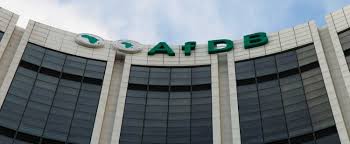
African Development Bank will inject $125 million into African Trade and Investment Development Insurance (ATIDI) to become its biggest shareholder and ramp up the use of guarantees to attract private capital, the bank’s president told Reuters.
Sidi Ould Tah, who took the helm of Africa’s largest development lender last September, is pushing a new financing model as development aid from rich countries dropped nearly a quarter last year to $174.3 billion.
The United States led the cuts, including to the AfDB’s concessional arm. The investment is part of his drive, known as the New African Financial Architecture for Development (NAFAD), to tap an estimated $4 trillion in Africa’s institutional capital like pensions, sovereign wealth funds and savings schemes that is currently fragmented and uncoordinated, to plug an estimated $400 billion annual development financing gap.
“Our target is to bring the level of guarantees provided by ATIDI to 10 billion (dollars) annually and reach a target that will really unlock huge potential for financing infrastructure at scale,” said Tah after the bank’s annual meeting in Brazzaville last week.
The cash injection will take AfDB’s shareholding in the agency to 14% from 3%, he said. It has covered an average of $3 billion worth of investments annually in the past.
Nairobi-headquartered ATIDI was set up 25 years ago to de-risk investment in Africa through insurance and guarantees that help channel private capital into riskier markets.

It is owned by 24 African states and institutional investors, including African financial firms and Germany’s KfW Development Bank, which joined in April.
The AfDB move marks a shift away from ATIDI’s traditionally dispersed ownership structure, with stakes spread across member states — led by countries such as Togo and Benin holding high‑single‑digit shares.
AfDB is urging more African countries and investors to take stakes to boost ATIDI’s capital and expand its firepower, Tah said.
“We are also talking to various financial institutions and many countries to increase their contribution or to contribute if they are not yet shareholders,” he said.
France is considering increasing its shareholding, with more details expected at a G7 meeting in Evian later this month.
Some analysts, however, argue African countries should focus on raising savings to build domestic capital pools. Sub-Saharan Africa’s savings rate is about 18%, less than half the global average, World Bank data shows, reflecting low incomes and a young population. Tah said the bank could meet the region’s financing challenges.
-

 News7 hours ago
Cardoso formally receives Central Bank of the Year Award
-
 Oil and Gas7 hours ago
NNPC is house of thieves, fraud; Kyari must be arrested dead or alive to account for N210 trillion—Oshiomhole
-

 Economy7 hours ago
Nigeria’s Digital Boom needs nuclear power partnerships for long-term success
-
Uncategorized7 hours ago
June 12 Democracy Day declaration not enough, as citizens wallow in pain – ActionAid, FG declares Friday public holiday
-

 Oil and Gas7 hours ago
Dangote Refinery seeks $1bn private placement ahead of planned listing
-
 News7 hours ago
Middle East Conflict sends global growth to lowest rate since COVID-19, WBG to Provide up to $100bn for Affected countries over 15 Months—WBG
-
 News7 hours ago
High cost of cooking gas‘ll negatively impact environment, health, CPPE warns