
Business
Chinese investors waive right to respond to Nigeria’s petition to U.S. Supreme Court over assets seizure

Zhongshan Fucheng investors from China have waived their rights to support or oppose Nigeria’s petition to the U.S. Supreme Court over the seizure of $70 million from the oil-rich nation’s account with JP Morgan, according to a court filing. Nigerian authorities, scrambling to shield their international assets from vengeful Chinese investors over a botched trade zone deal in the early 2000s, sought the intervention of the U. S. Supreme Court after previous rulings from lower courts only favoured other Zhongshan investors. Nigeria filed a writ of certiorari asking the top court to examine their immunity argument and review rulings from lower courts.
In response, the U.S. Supreme Court, in an effort to be fair to all parties involved in the suit, asked the Chinese investors to respond, particularly if they wanted to support or object to Nigeria’s certiorari petition. However, the Zhongshan investors on Thursday declined and waived their right to respond, implicitly asking the high-ranking jurists to do what they deem fit with the information obtained from other rulings. The Zhongshan’s lawyers said they have no response unless the Supreme Court specifically mandates it.
In a silver lining for Nigeria, the U.S. Court of Appeals for the District of Columbia in Washington on September 26 said it will wait for the verdict of the U. S. Supreme Court before allowing Chinese investors to seize $70 million from the African nation’s crude earnings account with JP Morgan. Chinese investors had first filed a suit against the Nigerian government at a UK Court detailing instances of alleged abuse that their staff suffered after then Ogun governor Ibikunle Amosun crudely backed out of the trade deal. The investors claimed they were assaulted and detained by security officers at the former governor’s instructions and that the deal was cancelled without following stipulated contract terms. Consequently, the UK court awarded $55.6 million in compensation and $75,000 in moral damages alongside interests and arbitration fees against Nigeria.
It was the judgment that Zhongshan Fucheng investors took to the U.S. for enforcement, specifically requesting that the funds be taken from Nigeria’s account domiciled in JP Morgan. Nigeria tried to wriggle its way from paying the compensation, presenting an argument of sovereign immunity that insulated it from obeying the laws of other nations. But, the U.S. courts tossed out their argument as too weak and insufficient to stand against the strong accusations of the investors. Their dissatisfaction with the rulings led the President Bola Tinubu-led government to file a certiorari, seeking a final verdict at the U.S. Supreme Court. The certiorari, if granted, will have the senior judges examine the rulings of lower courts and decide if Nigeria’s argument of immunity alone was sufficient to save its international assets from being confiscated from the Zhongshan Fucheng Industry Ltd.
-

 News21 hours ago
Cardoso formally receives Central Bank of the Year Award
-

 Economy21 hours ago
Nigeria’s Digital Boom needs nuclear power partnerships for long-term success
-
 Oil and Gas21 hours ago
NNPC is house of thieves, fraud; Kyari must be arrested dead or alive to account for N210 trillion—Oshiomhole
-
 Oil and Gas21 hours ago
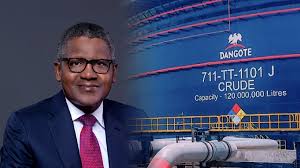
Dangote Refinery seeks $1bn private placement ahead of planned listing
-
Uncategorized21 hours ago
June 12 Democracy Day declaration not enough, as citizens wallow in pain – ActionAid, FG declares Friday public holiday
-
 News21 hours ago
Middle East Conflict sends global growth to lowest rate since COVID-19, WBG to Provide up to $100bn for Affected countries over 15 Months—WBG
-
 News21 hours ago
High cost of cooking gas‘ll negatively impact environment, health, CPPE warns