
News
Lagos IGR made up 67.72 per cent of the state’s recurrent revenue, others rely on FACC allocation—BudgIT

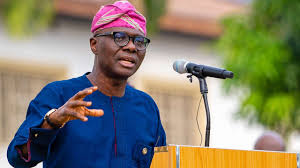
BudgIT in its has said that Lagos State stood out of the 36 states in the federation for the size of its internally generated revenue (IGR), which reached N1.71 trillion in 2025. Its IGR made up 67.72 per cent of the state’s recurrent revenue, with federal allocations accounting for the rest.
In its 2026 State of States report, launched on Tuesday, BudgIT said state finances should be judged by how governments raise and manage revenue, control costs, handle debt and spend on areas such as health, education, agriculture, water and sanitation.
It said that apart from Lagos other states remained more reliant on federal funds. The report said federal allocations provided 79.28 per cent of Kano’s recurrent revenue, 86.47 per cent of Anambra’s total revenue and 82.90 per cent of Abia’s.
BudgIT warned that dependence on federation transfers could leave state budgets exposed to changes in the amount and timing of shared revenue. It said stronger domestic revenue collection required better tax administration, fewer leakages and services that give residents a reason to comply.
According to BudgIT the increase in revenue available to states in Nigeria has not, by itself, ensured stronger public services. The civic technology organisation said federal transfers to the 35 states it assessed rose from about N5.4 trillion in 2023 to N11.38 trillion in 2024. But it cautioned that a larger pool of public funds does not necessarily mean better services or improved living conditions.
The report said “the fiscal dividend of macroeconomic reform must be assessed by its developmental consequences, not merely by the nominal growth of government receipts,” the report said. The report assessed 35 states using 2025 audited financial statements and fourth-quarter budget implementation reports.
Rivers State was excluded in the report because it did not produce an audited financial statement for 2025 or budget implementation reports for the year under review. Federal transfers remain central to state budgets
The report found that many states still depend heavily on money distributed from the Federation Account, despite the increase in transfers.

The report also cautioned that rapid growth in IGR might not be durable if it was driven mainly by one-off or non-tax receipts. In Enugu State, IGR rose by 125.91 per cent to N407.76 billion, but non-tax receipts accounted for 90.79 per cent of the increase. BudgIT said rising government operating costs could limit the money available for investment.
In Abia State, operating expenses climbed from N64.19 billion in 2024 to N126.68 billion in 2025. Overhead costs increased by 197.07 per cent to N70.87 billion, while personnel costs rose from N35.08 billion to N52.69 billion. The report said as a result, the state’s IGR covered 53.56 per cent of its operating expenses, down from 64.28 per cent in 2024.
The report noted that salaries and other operating expenses were necessary for government services, but warned that costs rising faster than revenue could reduce the resources available for development spending.
It also said increases in capital expenditure should be assessed by what projects were funded and completed. Higher budgeted spending does not automatically show that residents have better access to health, education, agriculture or water services.
The assessment urged states to look beyond the size of their debt when judging whether borrowing is sustainable. BudgIT said governments should also account for debt-servicing costs, foreign-currency exposure, arrears and other obligations. It noted that a state’s liabilities could include unpaid contractor, pension and gratuity claims that might not appear in its conventional debt stock.
Lagos recorded the highest debt stock, at about N2.90 trillion at the end of 2025. But the report also highlighted foreign-currency exposure in some states: it accounted for 76.06 per cent of Abia State’s debt stock and 92.73 per cent of Anambra’s, while Ondo’s foreign-currency liabilities made up 93.48 per cent of its total debt.
Osun State spent N100.17 billion on debt servicing, equivalent to 28.60 per cent of its total revenue, the report said. BudgIT recommended that states adopt medium-term debt plans, report guarantees and arrears transparently, and connect borrowing to investments that could support future services and revenue. It said governments should prioritise credible budgets and transparent implementation to ensure that rising public receipts lead to measurable benefits for residents.
-

 News1 day ago
Binance clients pull $4.7bn after hack as crypto world studies fallout
-
 Finance1 day ago
DMO raises FGN Savings Bond rates to 13.25%, 14.25% for November
-

 Finance1 day ago
Zenith Bank reinforces commitment to Africa’s creative economy through continued sponsorship of art X Lagos 2026
-

 Economy1 day ago
MSMEs account for 96% of Nigerian businesses, generate 87% of jobs, says FG
-
 Finance1 day ago
Afreximbank invests $145m in Veenocks’ project for industrial expansion, regional growth
-

 News1 day ago
80 students benefit as Dangote Cement, Okpella invests ₦32m in education, power infrastructure in Okpella
-
 Stock Market33 minutes ago
NGX All-Share Index, market capitalisation each rose
-

 News1 day ago
PTAD disburses N13.87bn pension increment arrears to retirees of PHCN, NITEL, Peoples Bank of Nigeria, others