
Economy
Sub-Saharan Africa GDP growth to rise to 3.1 pct in 2018 -World Bank

Sub-Saharan Africa is on course for economic growth of 3.1 percent this year, the World Bank said on Wednesday, marginally slower than it previously forecast but faster than last year thanks to rising commodity prices. By 2020 growth in the region should pick up to 3.7 percent, it said. Sub-Saharan African economies were hit hard by a crash in commodity prices which slowed growth, slashed government revenues and weakened several of the continent’s currencies. Growth was 1.5 percent in 2016, the lowest in more than two decades, before rising to an estimated 2.6 per cent last year.
“While Nigeria, South Africa, and Angola are expected to see a gradual pick-up in growth, economic expansion will continue at a solid pace in the West African Economic and Monetary Union (WAEMU), and strengthen in most of East Africa,” the bank said in its Africa’s Pulse report for April. “These forecasts are predicated on the expectations that oil and metals prices will remain stable, expansion in global trade will stay robust, and external financial market conditions will continue to be supportive.” In January, the World Bank’s Global Economic Prospects report forecast growth in sub-Saharan Africa would rise to 3.2 per cent in 2018.
Nigeria, South Africa and Angola make up about 60 per cent of sub-Saharan Africa’s annual GDP. The bank said Nigeria was experiencing a recovery in oil output but hurdles in non-oil industries and services would be a drag on activity. “In Angola, the revisions reflect the expectation that a more efficient foreign exchange allocation system, increased availability of foreign exchange due to higher oil prices, rising natural gas production, and improved business sentiment would help support the rebound in economic activity,” the bank said.
“In South Africa, slowing inflation and improving business confidence are expected to help sustain the ongoing recovery in domestic demand, especially in investment.” The bank said that while growth prospects were encouraging, there were still hurdles ahead. “Growth in the non-oil industrial sectors has yet to pick up, underscoring the low structural transformation in the region; employment opportunities are lagging; public debt relative to GDP is rising; and poverty is widespread,” the report said.
It added that African countries in debt distress doubled to eight in the last five years, while those at high risk of going into debt distress had jumped to 18 from eight in the same period. The main risk to growth in the region was the possibility of a collapse in commodity prices, with a slowdown in China being a likely cause due to interest rate hikes or trade tensions with the United States. “A collapse in oil and metals prices would severely undermine efforts at fiscal consolidation, derailing progress in reining in the region’s debt burden,” the World Bank said.
-

 Economy1 day ago
CPPE expresses worry over real-sector financing gap of over ₦50trn, proposes new devt-finance architecture
-
 Oil and Gas1 day ago
Energy professionals demand probe of NNPC, NUPRC over transparency concerns
-

 Economy1 day ago
Alake’s media aide debunks claims of handing over Nigeria’s solid minerals to Chinese
-

 Oil and Gas1 day ago
Group urges Ogoni to support resumption of oil production, 33-year shutdown cost Nigeria, Rivers $226bn
-
 Economy8 hours ago
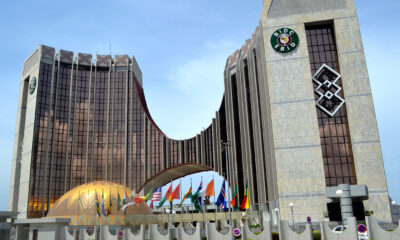
EBID, CORIS Holding sign 80m euro financing agreement to strengthen food, energy, agric value chains in West Africa
-

 News8 hours ago
Breastfeeding can improve Nigeria’s economy—Commissioner
-

 Oil and Gas8 hours ago
Oil prices drop 5% to three-week low after Trump cancels attack on Iran
-
Oil and Gas8 hours ago
NNPC remits N6.286trn into federation account between January and June 2026, issues another tender to sell Cawthorne crude