
News
New human-machine collaboration framework to prepare industrial work force for intelligent factories

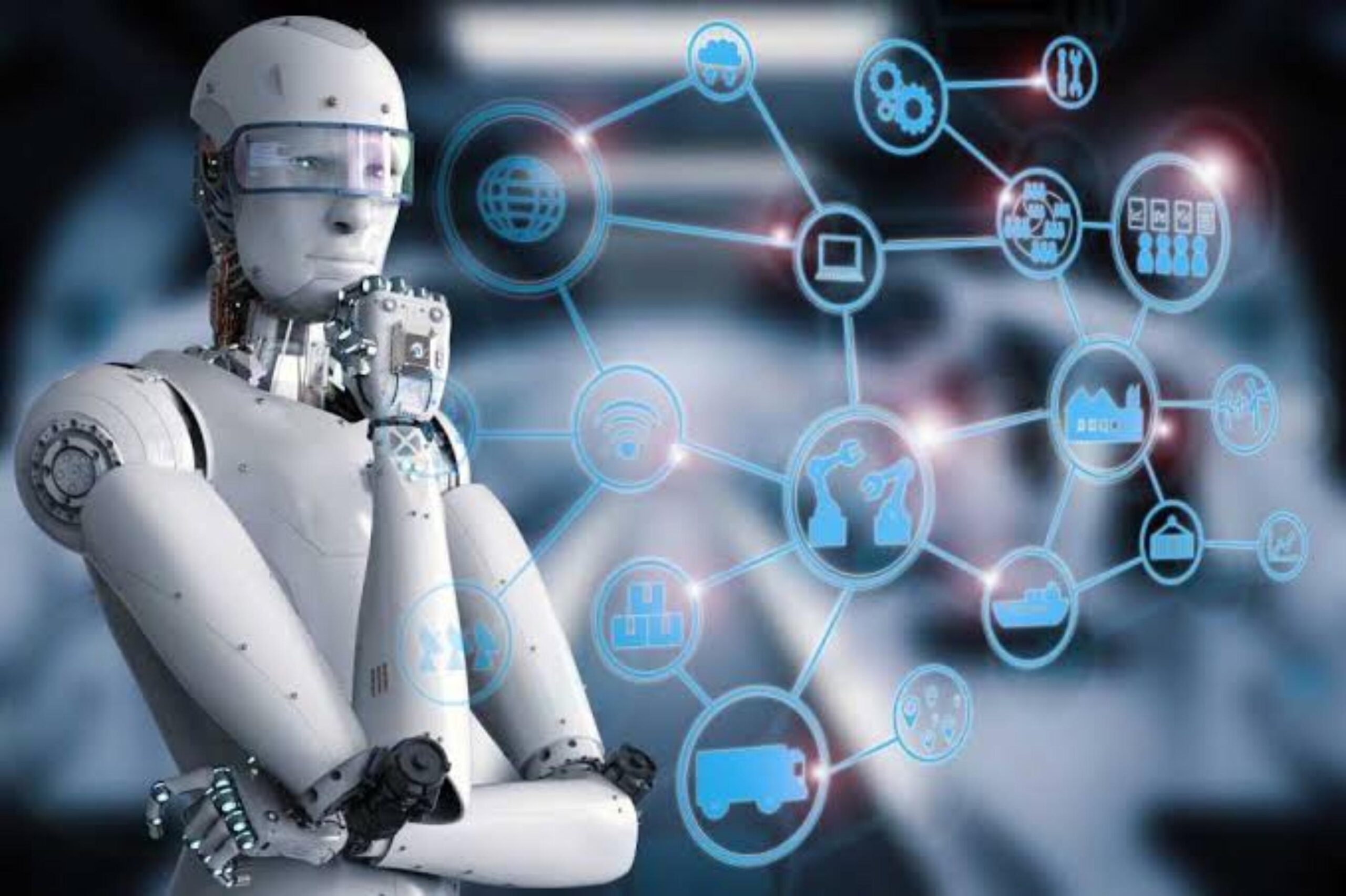
The World Economic Forum has launched the Human-Machine Collaboration Framework, a new comprehensive guide to help companies, governments and educators prepare the workforce for the future of industrial work.
The framework maps more than 80 jobs across manufacturing and supply chains, showing how jobs, tasks and skills are expected to evolve as intelligent operations become more widespread.
Manufacturing and supply chains are entering a new era of human-machine collaboration. While 86% of employers expect AI and information-processing technologies to transform their businesses by 2030, 63% identify skills gaps as the biggest barrier to transformation.
Evidence from the Forum’s Global Lighthouse Network shows that workforce readiness is already becoming a competitive differentiator, with leading sites investing in human-machine collaboration, digital skills and new ways of working to improve performance.
The Human-Machine Collaboration Framework, developed by the World Economic Forum in collaboration with Accenture, helps organizations understand how workflows, tasks, jobs, and skills are evolving, and prepare their workforce for the age of intelligent operations, working together with AI and frontier technologies.
“Manufacturing is entering its next paradigm shift, and the breakthrough this time isn’t a machine, it’s the partnership between people and intelligent systems,” said Kiva Allgood, Managing Director, World Economic Forum.
“The companies winning this transition aren’t replacing workers with AI, they’re multiplying human judgment at scale. This framework gives leaders the roadmap to build that future on purpose.”
At the centre of the initiative is a new digital Resource Hub, which maps more than 80 industrial jobs across product development, planning, production, maintenance, quality, logistics and supply chain management.
The analysis finds that three in four industrial jobs are expected to evolve over the next decade, with 75% expanding in scope or moving towards higher-value activities.
The framework groups jobs into four categories: Elevated, Expanded, Emerging and Consolidated. It also includes a Skills Matrix showing which skills, tools and behaviours will be needed in future industrial operations.
The analysis finds that around 40% of future industrial skills are new or emerging, with growing demand for judgement, machine oversight and the accountability and governance of autonomous systems.
Along with these new skills, a core set of human skills retain and, in some cases, increase in importance, including risk assessment and prioritization, stakeholder conflict resolution, trade-off arbitration, and executive communication and storytelling which will remain critical in industrial environments.
The framework also identifies new jobs expected to emerge in manufacturing and supply chains, including Supply Chains Intelligence Analyst, Quality Automation Technician, Control Tower Governor, Autonomous Logistics Specialist, Autonomous Warehouse & Fulfilment Operator, and Robotics Engineer/Orchestrator.
“One of the most critical priorities for manufacturers today is preparing the workforce for a future where people and intelligent systems must work seamlessly together,” said Vidya Gubbi, Chief of Global Operations at Western Digital.

“As AI and automation reshape operations, investing in the next generation of talent and continuously upskilling our workforce to adapt to evo lving roles has never been more important. The Human-Machine Collaboration Framework helps organizations do this by designing a future that enables human potential alongside AI and automation.”
Alongside the Resource Hub, the initiative offers an Activation Playbook that provides practical guidance for organizations, site leaders and ecosystem stakeholders on implementing human-machine collaboration in practice.
The Playbook outlines strategies for redesigning workflows, developing industrial workforce skills, building trust in intelligent systems and aligning workforce investments with technology deployment.
The framework and accompanying resources were informed by 40+ consultations with industry leaders, policymakers, academics and workforce experts, 10+ community workshops globally and insights from Lighthouse site visits.
Together, the Resource Hub and Activation Playbook provide an evidence-based foundation for industrial workforce transformation in the age of AI.
“As Vietnam moves up regional and global value chains, future competitiveness will depend not only on technology adoption, but on how effectively people and intelligent systems work together,” said Mr. Le Truong Duy, Director, Ho Chi Minh City Centre for the Fourth Industrial Revolution, Vietnam.
“The Human-Machine Collaboration Framework, with its human-centric philosophy, provides a valuable foundation for aligning workforce development, AI adoption and industrial transformation around a shared vision of future work, helping build more resilient, innovative and future-ready industries.”
Going forward, the Human-Machine Collaboration Framework will serve as a shared foundation for industry leaders, governments and educators seeking to prepare workforces for the next era of industrial operations.
By providing a common architecture for understanding future workflows, jobs, and skills, the initiative aims to support more coordinated workforce planning, talent development and policymaking across the manufacturing and supply chain ecosystem.
We look forward to partnering with industries, policymakers and academia to adopt the framework and realize impact.
-

 Finance2 days ago
AfDB takes $30m equity investment in EBID as first institutional investor
-
 Economy2 days ago
Closing the skills gap: why industry must help lead the way—WBG
-

 News2 days ago
SERAP urges NASS members to refund N110bn spent on luxury cars, unlawful allowances
-
 News23 hours ago
Britain’s Energy Crisis Is Driving Manufacturing Offshore
-

 Economy23 hours ago
IMF ready to help Africa weather Middle East shock—Zeidane
-
Uncategorized23 hours ago
Afreximbank signs $500m term loan facility with the Central Bank of Tunisia to support realisation of strategic goals
-

 Maritime2 days ago
NIMASA, ITC-ILO sign MoU to boost capacity development
-

 News2 days ago
Reps c’ttee threatens sanctions on poor PIA implementation, as stakeholders seek close monitoring