
Oil and Gas
2026 global gas flaring tracker reports 167bn cubic meters (bcm) in 2025 estimated at $54bn

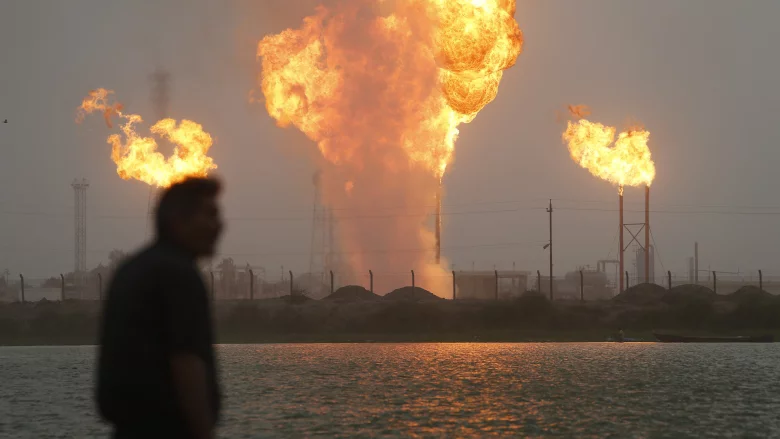
The latest Global Gas Flaring Tracker, an independent report of gas flaring worldwide, said that global gas flaring rose for the third consecutive year in 2025, reaching 167 billion cubic meters (bcm), the highest recorded level since 2019.
The gas wastefully burned could have powered homes and industries, created jobs, reduced import bills, and extended electricity access and clean cooking fuels for communities that still lack it.
Published annually by the World Bank’s Global Flaring and Methane Reduction (GFMR) Partnership, in collaboration with the Payne Institute at the Colorado School of Mines, the report provides a comprehensive independent assessment of global gas flaring volumes, intensity, and trends.
The 167 bcm of gas flared in 2025 exceeds the volume of LNG (liquified natural gas) that transited the Persian Gulf last year; a resource large enough to equal the gas consumption of Africa, yet burned without benefit.
The gas wasted in 2025 was worth an estimated $54 billion. Eliminating routine flaring globally would require $70–100 billion in upfront investment, roughly twice what is currently being lost each year.
Yet despite the tools needed to end routine flaring being well established, it persists; what holds back progress is not technical but structural — inadequate regulation, insufficient capital, limited market infrastructure, and a failure by operators and governments to treat reduction as a priority.
Kazakhstan has cut flaring by 87 percent since 2012, and the United States made the largest absolute reduction of any country in 2025. Proven solutions exist. What is needed is the commitment to deploy them.
The report finds that the 167 bcm flared globally in 2025 exceeds the volume of LNG that transited the Persian Gulf that year, a stark measure of the energy value being wasted.
It also matches Africa’s entire annual gas consumption, a continent where energy poverty remains a significant barrier to economic development.
In effect, oil producers are burning a valuable resource that could support energy access, reduce reliance on costly imports, generate much-needed revenue in developing countries, and cut greenhouse gas emissions.
With acute energy challenges persisting across much of the world, the scale of this missed opportunity demands urgent attention from policymakers, operators, and investors.
In Sub-Saharan Africa, power outages have been associated with a 14 percent reduction in employment, a reminder that energy is not just an input cost, but a key enabler of economic development.
If captured and used to generate power, the 167 bcm of gas flared could provide approximately four billion kilowatt-hours of electricity, enough to make a material difference in underserved communities around the world.
For governments in oil-producing developing countries, flaring reduction represents a win-win: capturing associated gas generates government revenues, expands reliable energy access, enables industrial growth, and supports job creation. The gas is already there. The question is why it is wastefully burned rather than used productively.

The US$54 billion worth of gas flared in 2025 represents an annual loss that compounds with every year of inaction. The estimated cost of eliminating routine flaring globally is US$70–100 billion in upfront investment, roughly twice the annual value of the gas currently being wasted.
The technologies required to capture, process, and utilize associated gas are mature and widely available. The barrier is not the availability of technology or the absence of viable economics.
It is the lack of pipeline infrastructure, gas market development, access to capital, and enforced regulatory standards that make flaring reduction obligatory rather than aspirational.
“The technologies, policies, regulations, and financing mechanisms needed to capture and utilize associated gas are available.
What is missing, in too many places, is the leadership, prioritization, and governance needed to put these solutions into practice, creating access to markets and infrastructure.
The cost of inaction will be measured in wasted billions in revenue and energy insecurity for millions of people.”
In 2025, the United States achieved the largest absolute reduction in flaring of any country globally, cutting volumes by 0.4 bcm (7 percent).
This was driven in significant part by the commissioning of the Matterhorn Express pipeline in the Permian Basin, direct evidence that infrastructure investment can translate into measurable flaring reductions.
Kazakhstan has reduced its flaring by 87 percent since 2012, a transformation achieved through sustained regulatory pressure, government commitment, and targeted infrastructure investment.
These examples demonstrate that even large, complex oil-producing economies can dramatically change course when political will is aligned with investment, and that significant progress is possible when producers take action.
The 2026 edition introduces an enhanced methodology drawing on data from three NOAA satellites and an improved flare location catalog and calibration method developed with the Payne Institute at the Colorado School of Mines.
Together, these advances improve both the accuracy and completeness of flare volume estimates.
-

 News1 day ago
NTDA, China partner to attract more Chinese tourists to Nigeria
-

 News1 day ago
BRICS pushes local currency trade to cut transaction costs
-
 Finance1 day ago
Subscribe to Dangote Refinery shares through Zenith Bank
-

 Tech5 hours ago
China rejects U.S. tech leaders’ calls to slow AI development over security risks
-

 Oil and Gas5 hours ago
Oil prices climb over 2% after strikes on Saudi pipeline and ships in Middle East
-
 Finance1 day ago
PAPSS) targets accelerated adoption, transaction growth as network expands across Africa
-

 Maritime1 day ago
Aquatic life restored in Ogoni creeks—FG
-
 News1 day ago
AD Consulting, Ecobank bring Nigeria’s art, architecture icons together in “The Convergence”