
News
Twenty years of progress on gender parity now fragile—WEF report

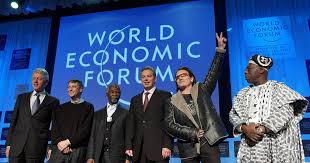
Twenty years after the World Economic Forum first measured the global gender gap, the world is closer to parity than ever, but progress is fragile, with gains reversing in some areas, according to the Global Gender Gap Report 2026, published today.
According to the new report Iceland leads in the report’s rankings for the 17th consecutive year, with 93% of the gender gap closed, and remains the only country to have closed more than 90% of its gap.
Finland (87.2%) and Norway (85.7%) hold second and third for the third year running. Namibia (84.5%) climbed four places to fourth, the highest-ranked country in Sub-Saharan Africa, followed by the United Kingdom (84.2%), New Zealand (82.8%), Sweden (82.3%), Australia (81.9%), Germany (81.7%) and Ireland (81.4%).
Australia entered the top 10 for the first time. Four economies have appeared in every top 10 since 2006: Iceland, Finland, Norway and Sweden.
Progress has come in phases. Improvement peaked before the pandemic, when 76% of tracked economies recorded gains, before widespread setbacks. Since 2024, more than half of indexed economies have regained momentum. The biggest climbers in this year’s ranking are Kenya (65th, up 33 places), Ghana (56th, up 32), Guatemala (50th, up 31), Angola (87th, up 30) and Czechia (77th, up 25).
Women now reach senior leadership in business and government at levels that were rare in 2006 yet remain largely underrepresented in roles that carry the greatest economic and political influence.
The 20th edition of the report, the longest-standing index of its kind, benchmarks 145 economies across four dimensions: economic participation and opportunity, educational attainment, health and survival, and political empowerment. Globally, the gender gap now stands at 69.2% closed, where 100% represents full parity, up 0.4 percentage points over the past year.
Among the 97 economies tracked since 2006, the gap has closed by 5.2 percentage points to 69.4%, the highest level recorded. Economic participation and opportunity (61.7%) and political empowerment (22.1%) are the dimensions furthest away from parity. At the current rate of progress, full parity across all measures is still 120 years away.
“Twenty years of data show that gender parity is achievable. Economies at every income level have made progress, so the barrier is not a lack of resources,” said Saadia Zahidi, Managing Director, World Economic Forum. “Parity is a foundation for growth and competitiveness, but it is not inevitable. To accelerate, governments and employers need to learn from the policies that work and apply them faster. A new economy demands a new approach to talent.”
The economies that have progressed the most in closing their gender gaps since 2006, each closing at least 12 percentage points of their gap, are Bolivia, Chile, Ecuador, France, Guatemala, Iceland, Mexico, Namibia and Nepal.
Nearly every economy tracked since 2006 has improved, and the first decade of the index delivered faster gains than the seco 4.3. In parliaments, the ratio has moved from one woman for every 5.6 men to one for every three or so.
But political empowerment is also the dimension showing the clearest signs of reversal. It now scores lower than it did in 2016 and slipped a further 0.4 percentage points in the past year. At the very top, the share of economies – in the report’s constant sample of 97 economies – led by a woman head of state peaked at 27% in 2022, the highest in half a century, and has since fallen back to 2016 levels, erasing the gains made in the first part of the decade.
Europe reclaims the top regional position with 75.7% of its gender gap closed, having narrowed it by 7 percentage points since 2006. Seven of the global top 10 performers across the index are European. The region leads the world in political empowerment (37%), where the parity score measured at head-of-state level has tripled since 2006.
Northern America ranks second at 75.2%, slipping 0.6 percentage points from last year and losing the top regional spot as Canada improves its score and the score of the United States declines. The region leads globally in economic participation and opportunity (77.1%) and educational attainment (100%). Its political empowerment score fell 3.3 percentage points, driven mainly by lower ministerial representation.
Latin America and the Caribbean holds third at 74.5% and leads the world in health and survival (97.7%). The region has the fastest long-term trajectory of any region, though it is still only on course to close its gap in 60 years at the current rate of progress. It has narrowed its gender gap by 8.6 percentage points since 2006, the largest improvement of any region.
Eastern Asia and the Pacific rises to fourth at 70.3%, with New Zealand and Australia both in the global top 10. The region records the second-highest economic participation and opportunity score (71.4%).
Central Asia ranks fifth at 70.0%. The region has improved by 2.9 points since 2006 and is projected to be the last to reach parity, based on the current pace of progress.
Sub-Saharan Africa ranks sixth at 68.8%, up 1.6 percentage points from last year, and shows the widest variation of any region, with Namibia fourth in the world. Its strongest long-term gain is parity among legislators, senior officials and managers, up 28.7 percentage points since 2006.
Southern Asia ranks seventh at 64.5% and remains the lowest-scoring region in economic participation and opportunity (40.9%). It has recorded the largest educational gain of any region since 2006, up 15 percentage points, with almost all economies now at parity in tertiary enrolment.
Middle East and Northern Africa ranks eighth at 62.5%, improving by 0.2 percentage points from last year. The educational gender gap has narrowed to under 3%, while parity in political empowerment remains the lowest of any region at 11.5%.
Drawing on data from the LinkedIn Economic Graph Research Institute, the report finds that since 2024, women’s share of top-level management has stalled at an average of under 30% across 62 economies.
The pipeline behind it is narrowing too. In the 16 economies with hiring data being tracked, women’s share of new hires into those roles has fallen every year since 2022, from 34.8% to 32.3% in the first two quarters of 2026.
Within the C-suite, women hold 19.1% of chief executive officer roles and around a quarter of chief financial officer and chief operating officer roles, the positions that typically a re among the most common routes to the top job. Meanwhile, women hold around two-thirds of chief human resources and chief people officer roles but occupy under one in five chief information and under one in 10 chief technology officer roles.
This pattern repeats across government roles. The number of ministerial portfolios headed by women has risen 26% since 2008, but only one in 10 was high influence then – a share virtually unchanged today. This points to a barrier in how positions are allocated rather than in the availability of talent.
Data from the World Bank’s Women, Business and the Law project shows governments significantly broadened the legal frameworks related to gender parity in past decades, with a particular boom in activity occurring in the early millennium.
While 96% of reforms have expanded legal rights for women worldwide, regions have followed differing reform trajectories over time, reflecting context-specific moments and reform priorities. Overall, Europe, Northern America, and Latin America and the Caribbean enforced much of their reform activity between the 1990s and the 2000s.
Middle East and Northern Africa had a later start yet progressively increased its reform activity until becoming the most reform-intensive region in the current decade.
Women are less represented in artificial intelligence (AI) firms than in comparable non-AI firms at every level, representing respectively 36.6% and 44.8% of employees at individual contributor level, and 25.3% to 27.7% of top management, according to LinkedIn data.
Within AI occupations, women are concentrated in data annotation roles, which are often lower-paid AI positions, while making up just 19.3% of AI engineers. The share of women founders with AI engineering skills has risen from 2.3% in 2019 to 8.7% in the first two quarters of 2026, though men continue to move faster.
“Progress towards gender parity in leadership has stalled for a fourth year. Based on the current trajectory, girls born today will not see equal representation at the top in their lifetime. And the issue is even more pronounced for women working in AI roles,” said Sue Duke, Managing Director for EMEA & LATAM and Head of Global Public Policy & Economic Graph at LinkedIn. “But we can change that trajectory by tackling the persistent barriers holding women back as their careers progress – from better investment in skills, hiring based on capability, and normalising non-linear careers.”
-

 Oil and Gas2 days ago
Oil prices climb over 2% after strikes on Saudi pipeline and ships in Middle East
-
Oil and Gas1 day ago
Oil jumps nearly $3 as Saudi export halt, Libya outages stoke supply fears
-

 Tech2 days ago
China rejects U.S. tech leaders’ calls to slow AI development over security risks
-
 Economy1 day ago
WTO says global trade system at critical juncture, urges reform
-
 Oil and Gas1 day ago
NLNG aims to start up Train 7 LNG project by end-2027
-

 Maritime1 day ago
Cabotage implementation a priority—NIMASA DG
-

 Agriculture2 days ago
FG-IFAD project contributes $68.7m to Nigeria’s economy
-
 News2 days ago
Tinubu orders release of funds to regional development commissions