
Finance
African nations now send more money to China than they receive in new loans

China’s role as a leading financier to developing nations has shifted over the past decade, with new loans to poorer countries falling sharply while debt repayments continue to rise, according to analysis released by ONE Data.
The inaugural report by the ONE Data initiative found that many low- and middle-income countries, particularly in Africa, are now transferring more funds to China in debt payments than they receive in fresh financing from the world’s second-largest economy.
The swing has coincided with a surge in net financing from multilateral institutions, which have become the main source of development finance once debt-service outflows are taken into account.
Multilateral lenders increased net financing by 124% over the past decade and now provide 56% of net flows, equivalent to $379 billion between 2020 and 2024, the analysis found.
“The fact that there’s less lending coming in, but that previous lending from China still needs to be serviced — that’s the source of the outflows,” said David McNair, executive director at ONE Data.

In 2020-24, the most recent period for which data is available, Africa saw the largest impact, with an inflow of $30 billion in 2015-19 turning to an outflow of $22 billion.
The data does not include cuts that took effect in 2025. The closure of the U.S. Agency for International Development last year and a drop in allocations from other developed countries has already hit developing economies, especially in Africa.
Once 2025 data becomes available, it is likely to show a large drop in Official Development Assistance flows, said McNair. He said the trend was “a net negative” for African nations, as many governments face difficulties funding public services and investment – but would at the same time promote domestic accountability as governments rely less on external financing.
The report also highlighted a broader decline in bilateral finance flows and private external debt – also trends likely to be exacerbated by aid cuts from 2025 onwards. Reuters
-

 Economy1 day ago
CPPE expresses worry over real-sector financing gap of over ₦50trn, proposes new devt-finance architecture
-

 Economy1 day ago
Alake’s media aide debunks claims of handing over Nigeria’s solid minerals to Chinese
-
 Oil and Gas1 day ago
Energy professionals demand probe of NNPC, NUPRC over transparency concerns
-
 Economy3 hours ago
EBID, CORIS Holding sign 80m euro financing agreement to strengthen food, energy, agric value chains in West Africa
-

 Oil and Gas1 day ago
Group urges Ogoni to support resumption of oil production, 33-year shutdown cost Nigeria, Rivers $226bn
-
 Stock Market3 hours ago
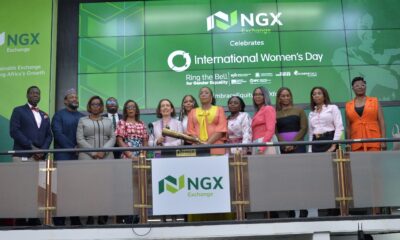
NGX All-Share Index advanced by 0.18%, capitalisation increased by 0.18% to N158.61trn
-

 News3 hours ago
Breastfeeding can improve Nigeria’s economy—Commissioner
-

 Oil and Gas3 hours ago
Oil prices drop 5% to three-week low after Trump cancels attack on Iran