
Finance
Monetary reforms yielding positive result; inflation drop, forex stability—CBN

The Central Bank of Nigeria (CBN) has said that the Nigerian economy is firmly on the path to recovery, saying that the sharp decline in inflation, renewed exchange rate stability, and the rebound in external reserves to its return to orthodox monetary policies, as well as the coordinated reforms undertaken over the past two years. Deputy governor, Corporate Services, CBN, Emem Usoro, who said this at a seminar for Business Editors and Financial Correspondence said the bank’s reform agenda, which included strengthened corporate governance, tighter compliance frameworks and the ongoing bank recapitalisation programme, had been instrumental in restoring confidence and reversing several macroeconomic distortions that once threatened the stability of the financial system.
Usoro said that, when the current CBN Management assumed office, the macroeconomic environment was under severe strain, with high inflation, volatile exchange rates, dwindling external reserves, and a crippling foreign exchange backlog that forced the economy into heavy reliance on Ways and Means financing. She said the bank’s decision to return to disciplined, market-driven policy tools was essential to halting the drift. “When this management team assumed office, the macroeconomic environment was challenging, with high inflation, unstable Naira, low reserves and a significant foreign exchange backlog…
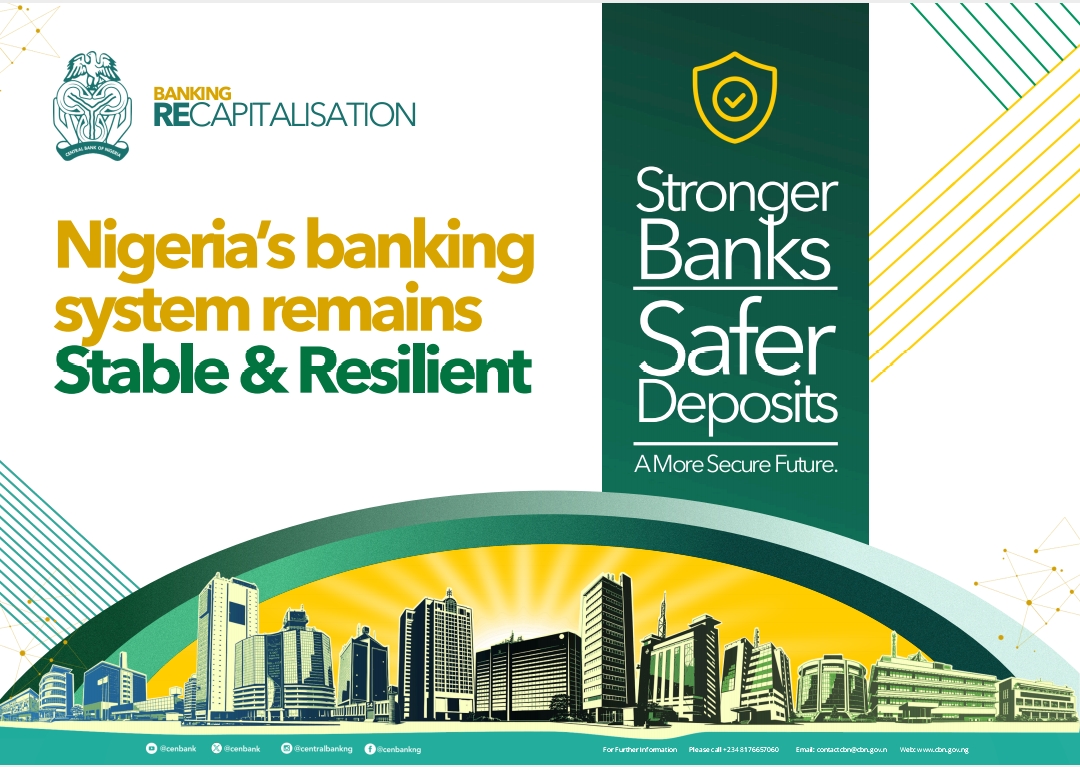
The bank implemented well-sequenced and compliance-driven measures, including orthodox monetary policies and strengthened corporate governance. “These actions align with the federal government’s reform agenda and have helped restore stability and key macroeconomic indicators, “ Usoro said. According to her, inflation has now declined to 16.05 per cent, while the exchange rate has stabilised below N1, 005 with minimal volatility. She added that the country’s external reserves have climbed above $46 billion, providing more than 10 months of import cover, a development she described as a clear sign of policy traction after years of instability. The deputy governor emphasised that effective communication and public engagement remain crucial to sustaining the gains achieved so far. She urged the media to continue amplifying the benefits and progress of ongoing reforms, saying, and Public understanding is central to policy
success.
While acknowledging the significant progress made, Usoro warned that more work lies ahead to improve macroeconomic fundamentals and raise the standard of living for Nigerians. She called for more substantial alignment between fiscal and monetary authorities to ensure policy co-herence and deepen financial system resilience, especially as technological innovation and digital finance continue to reshape the landscape. She emphasised that, while progress has been made, further work is needed to enhance macroeconomic fundamentals and improve the standard of living for Nigerians, adding that aligning fiscal and monetary policies is crucial for strengthening the financial system and ensuring resilience. Usoro thanked participants at the seminar and expressed optimism that the engagements would produce actionable recommendations capable of strengthening policy collaboration and enhancing economic outcomes
-

 News2 days ago
Breastfeeding can improve Nigeria’s economy—Commissioner
-

 Oil and Gas2 days ago
Oil prices drop 5% to three-week low after Trump cancels attack on Iran
-
 Oil and Gas2 days ago
NNPC remits N6.286trn into federation account between January and June 2026, issues another tender to sell Cawthorne crude
-
 News2 days ago
NESG appoints Engr. Adeleye Falade, FNSE to its board
-
 Economy2 days ago
EBID, CORIS Holding sign 80m euro financing agreement to strengthen food, energy, agric value chains in West Africa
-
 Stock Market2 days ago
NGX All-Share Index advanced by 0.18%, capitalisation increased by 0.18% to N158.61trn
-
 Finance14 hours ago
CBN holds fair in Gombe to deepen financial inclusion, promote economic growth
-
 Agriculture14 hours ago
African Development Fund grants $4.3m to strengthen integration of natural capital into decision-making in 13 African countries