
Agriculture
Nigerians seek lower food prices, stronger food security

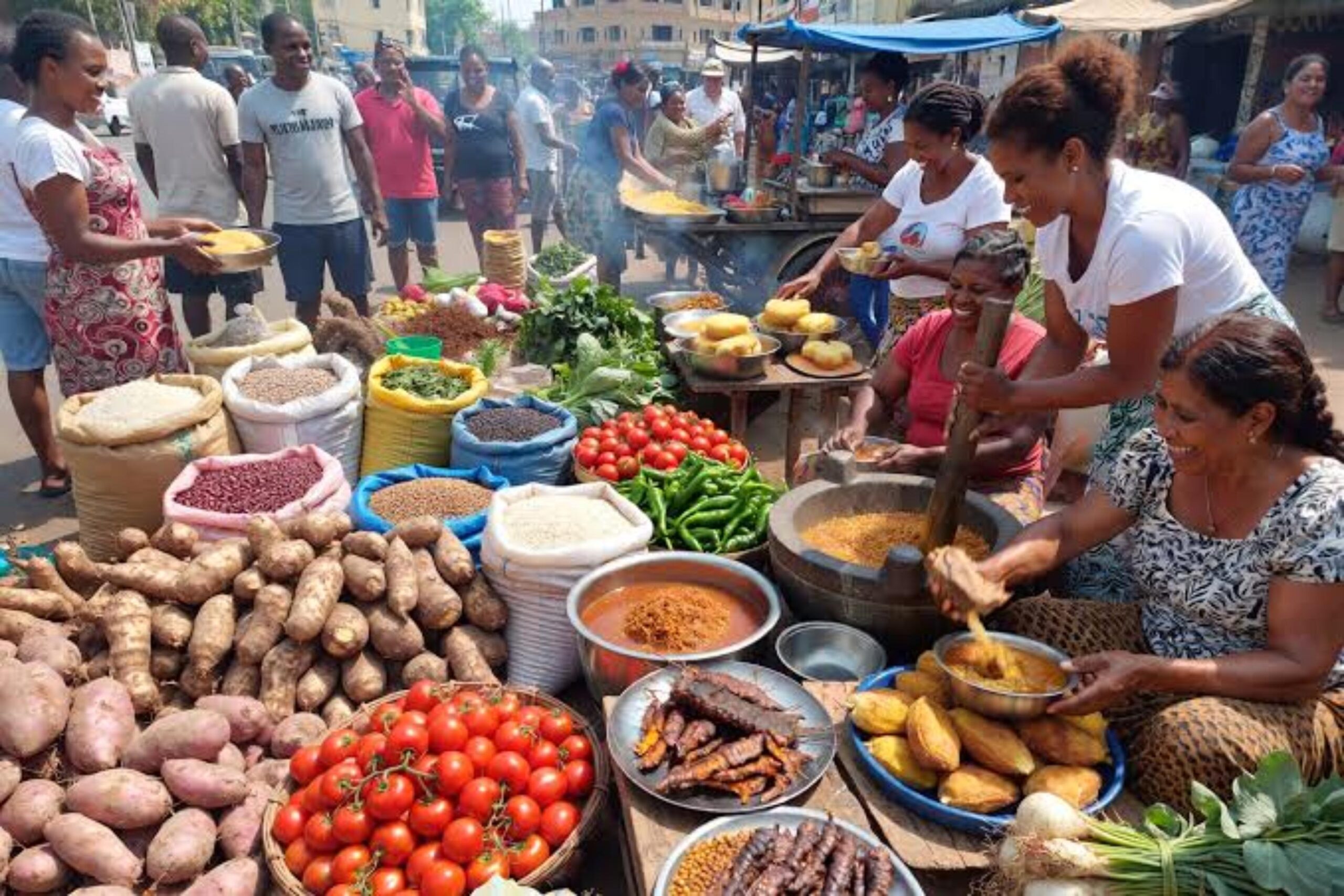
Some Nigerians have called for stronger measures to improve food security, protect farmlands and reduce the prices of agricultural produce.
The respondents, comprising consumers and traders, made the call in separate interviews with NAN on Thursday in Lagos.
They spoke while assessing Nigeria’s food sector amid current economic realities as the country commemorates its 66th Independence anniversary. They identified high food prices, insecurity on farmlands and rising transportation costs as major challenges to achieving food security.
Ms Abodun Deborah, a resident of Bamgboye Street, Mushin, said the food sector had fared badly in recent times. Deborah said food prices had continued to fluctuate, making it difficult for many households to cope with reduced purchasing power. She attributed part of the increase in food prices to rising transportation costs.
“I would really hope things become cheaper, starting from where the traders get the products and from the traders themselves. Food is one of the basic necessities of life. It would be good if the common man could get food at a cheaper price instead of struggling to afford even a morsel of food,” she said.
Also, Ms Rokibat Ahmad, a resident of Amuwo-Odofin, said prices of some food items had doubled or tripled from what they previously cost.
Ahmad called for measures to make food available at lower prices and urged traders to consider consumers when fixing prices.
She urged the government to address issues surrounding the movement of food across borders, particularly rice.
Ahmad said seizures of food items by customs officials could contribute to higher prices as sellers passed additional costs to consumers.However, Mr John Igwe, a trader at Costain, identified fuel price increases and rising transportation costs as major factors affecting agricultural commodity prices.
Igwe said border closures had contributed to the increase in rice prices, adding that reopening the borders could help reduce prices.

According to him, the cost of transporting a bag of beans to Lagos had risen from about N6,000 to between N10,000 and N12,000. A wholesaler at Otto White Sand, Oyingbo, Mr Onome Joseph, who sells food stuff in bags, said insecurity in farming communities had affected food production.
Joseph said insecurity had discouraged farmers from cultivating farmlands located far from towns.
“When there is security in the country, farmers will be able to go deeper into the forests to farm. When farmers go deeper into the forests to farm, they are likely to have a bountiful harvest. The bountiful harvest will lead to a surplus of food items in the market, and that will force the price down,” he said.
On his part, Mr Ben Maranzu, a banker in Victoria Island, said sustained agricultural investment was needed to boost production and reduce logistics costs. Maranzu said greater competition in the sector would also be necessary before Nigerians could experience more affordable food.
He said government’s increased focus on fertiliser access, farm inputs, food-security programmes and agricultural financing had yet to consistently translate into cheaper food. Maranzu said the distinction between reducing food inflation and reducing food prices was important in assessing the impact on households.
“Lower food inflation doesn’t mean cheap food. A slowdown from 40 per cent food inflation to 20 per cent is an improvement in the rate of increase.
“But the level of food prices is still painfully high for most households due to the low purchasing power of the masses,” he said.
Maranzu said food prices had not returned to their previous levels, in spite of a slowdown in the rate at which prices were increasing.
He called for proper supervision of agricultural programmes to ensure that increased investment translated into improved food production and affordability.
“In the short term, I will say Nigeria is no longer experiencing the same acceleration in food prices as we experienced in 2023-2024. But Nigerians are still paying considerably more for food than they were before the current economic crisis,” he said. NAN
-
Oil and Gas24 hours ago
NNPC declares ₦7.2tn after tax profit in 2025 financial year
-

 Economy24 hours ago
$700bn Nigeria critical minerals deal with U.S. will deepen ties: Trump Admin
-

 News24 hours ago
FG proposes creation of energy zones to deliver 24-hour electricity
-

 Uncategorized24 hours ago
Dangote breaks ground on $16bn East African oil refinery in Kenya
-
 Agriculture24 hours ago
FG plans single-digit loans for livestock sector
-

 Economy24 hours ago
FG strengthens trade negotiation framework for economic dev’t
-

 News23 hours ago
EBID approves $390m for strategic investment across W/Africa
-

 Stock Market23 hours ago
NGX closed session on a negative note