
Oil and Gas
Crude oil prices touch two-week highs after Trump suggests U.S.-Iran cease-fire is over

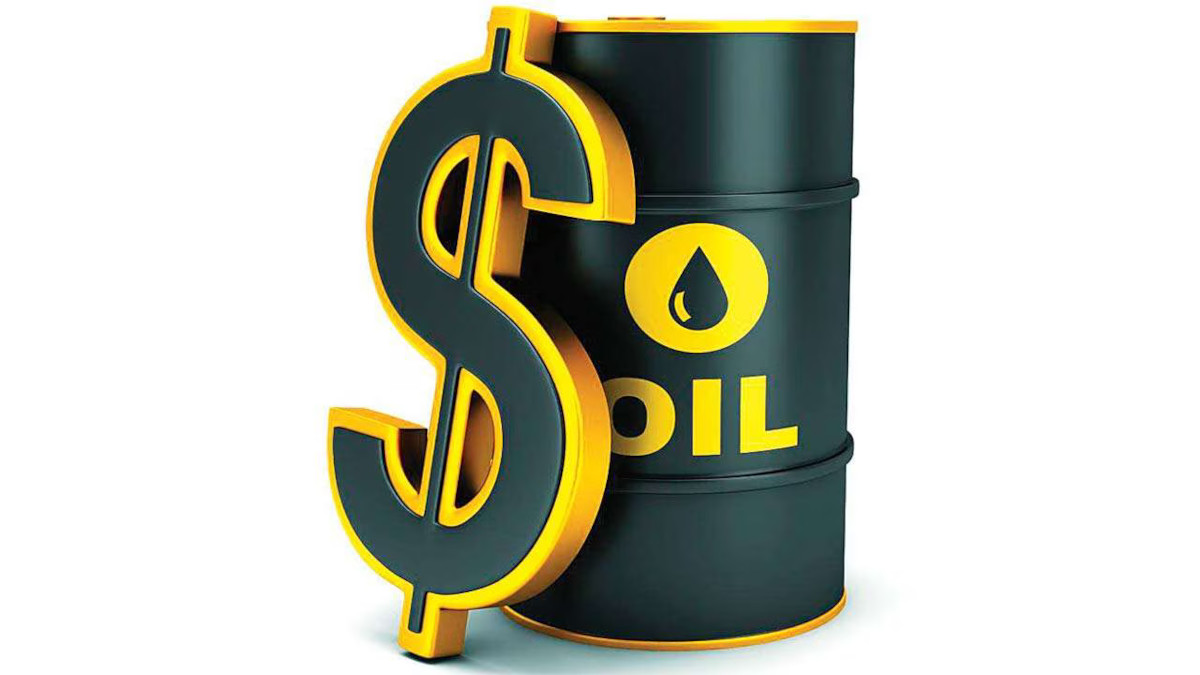
Oil prices touched their highest levels in more than two weeks on Wednesday after President Donald Trump said he believed the cease-fire with Iran was over.
The resumption of hostilities and Trump’s comments on the cease-fire have oil prices on edge, said Rob Haworth, senior investment director at U.S. Bank Asset Management. “Investors are next watching for military actions and strikes to best understand the impact on oil transit,” he said.
Speaking on the sidelines of the two-day NATO summit in Turkey Wednesday, Trump called Iranian leaders “scum” and said he did not “want to deal with” them anymore.
“There’s something wrong with them. They’re cuckoo,” the president said. When asked about the cease-fire, he responded: “For me, I think it’s over. It’s just a waste of time dealing with them.”
Trump did say that negotiations with Iran could continue. When Trump was asked if a full-scale resumption of hostilities was in the cards, he responded by saying he was giving Iran “a little warning” that the U.S. will “probably hit ’em hard tonight.”
Brent crude’s contract for September delivery was up 7.6% to $79.80 a barrel after touching a high of $79.93, the highest since June 22, FactSet data show. West Texas Intermediate’s August contract climbed 6.7% to $75.15, with an intraday high of $75.79, also the highest since June 22.
The rise in oil prices started Tuesday afternoon, after the Trump administration revoked its waivers on Iranian oil sanctions in response to suspected attacks by Iran on ships in the Strait of Hormuz. The two-day rally of over 9% is the biggest two-day gain for WTI futures since late April.
Global benchmark oil prices are higher than those of the U.S. benchmark and should support elevated U.S. crude-oil export activity, said Rob Thummel, senior portfolio manager at Tortoise Capital.
And for now, with oil futures for near-term delivery up more than the those for delivery in later months, the market appears more concerned about near-term supply disruptions than about a lasting global shortage, he said.
“The fundamental oil-market narrative remains unchanged: There is sufficient oil available globally, as long as it can be transported to where it is needed,” Thummel said.

However, if geopolitical developments disrupt the movement of oil around the world, prices could rise further to reflect the higher geopolitical risk. That renews worries about inflation.
Markets had become increasingly comfortable with the view that the “worst of the inflation shock is behind us,” Andreas Lipkow, chief market analyst at CMC Markets, wrote in a note. “If energy prices remain elevated, investors may need to reassess not only the outlook for inflation, but also expectations for interest rates and economic growth.”
Patrick Munnelly, market strategist at Tickmill Group, seconded that view, writing in a note on Wednesday: “The oil market is no longer simply pricing tanker flows or surplus risk. It is pricing the possibility that Middle East disruption returns at the exact point central banks were hoping lower energy would do part of the disinflationary work.”
Trump made his comments after the U.S. and Iran exchanged strikes overnight. U.S. Central Command said it hit over 80 Iranian targets in retaliation for suspected attacks on three oil tankers in the Strait of Hormuz. Tehran has not claimed responsibility for the attacks.
Following the strikes by the U.S., the Islamic Revolutionary Guard Corps said it responded by targeting 85 U.S. military bases in Bahrain and Kuwait.
Phil Flynn, senior market analyst at the Price Futures Group, pointed out that Iran had been selling a lot of oil before the U.S. revoked its license to sell.
Iran had exported about 36 million barrels since June 15, he said, citing data from TankerTrackers. Official Iranian figures and other trackers put that total at 40 million to more than 50 million, he said.
“That’s a blistering pace,” as stranded tankers and stored oil hit the market fast, boosted by temporary sanctions waivers and the partial reopening of the Strait of Hormuz, Flynn said. Now that oil will be off the market, and that will send prices higher again, he said. MW
-
 News3 hours ago
NTDA, China partner to attract more Chinese tourists to Nigeria
-
 News3 hours ago
BRICS pushes local currency trade to cut transaction costs
-

 Finance3 hours ago
Subscribe to Dangote Refinery shares through Zenith Bank
-

 News3 hours ago
AD Consulting, Ecobank bring Nigeria’s art, architecture icons together in “The Convergence”
-
 Finance3 hours ago
PAPSS) targets accelerated adoption, transaction growth as network expands across Africa
-

 Maritime3 hours ago
Aquatic life restored in Ogoni creeks—FG