
Economy
Nigeria inflation climbs higher in December as 2019 election heats up

Annual inflation in Nigeria, the general rise in prices of goods and services stood at 11.44 per cent in December, a seven-month high, up from 11.28 per cent in November, the National Bureau of Statistics said in a report. This implies that the cost of living in Nigeria is going up further than it is now. Inflation has been rising steadily since July, increasing chances that the central bank could tighten interest rates in 2019. The price index, which peaked at 18.7 per cent in January last year, has been in double digits for three years.
The Bureau in its report said “the consumer price index, (CPI) which measures inflation increased by 11.44 per cent year-on-year in December 2018. This is 0.16 per cent points higher than the 11.28 per cent recorded in November 2018. Increases were recorded in all COICOP divisions that yielded the Headline index. On month-on-month basis, the Headline index increased by 0.74 per cent in December 2018, up by 0.06 per cent points from the 0.80 per cent recorded in November 2018. The percentage change in the average composite CPI for the twelve months period ending December 2018 over the average of the CPI for the previous twelve months period was 12.10 per cent, showing 0.31 per cent point from 12.41 per cent recorded in November 2018.
“The urban inflation rate increased by 11.73 per cent, year-on-year, in December 2018 from 11.61 per cent recorded in November 2018, while the rural inflation rate increased by 11.18 per cent in December 2018 from 10.99 per cent in November 2018. On a month-on-month basis, the urban index rose by 0.76 per cent in December 2018, down by 0.07 from 0.83 per cent recorded in November 2018, while the rural index also rose by 0.72 per cent in December 2018, down by 0.06 per cent from the rate recorded in November 2018 (0.78) per cent.”

It will be recalled that in November, CBN Governor Godwin Emefiele said he expected the central bank’s tight monetary policy stance to continue in 2019, due to the inflation and exchange rate outlooks. He said the short-term outlook for the economy was good and that the country was open for foreign investors. The bank has kept benchmark rates tight at 14 percent for more than a year to curb inflation, support the Naira and attract foreign investors into the debt market.
Food prices, which make up the bulk of the inflation basket, rose to 13.56 per cent in December, up from 13.30 per cent a month earlier. Nigerians will vote on Feb. 16 in a presidential election. Incumbent Muhammadu Buhari is seeking a second term, campaigning on his anti-corruption record. Buhari’s record on the economy will also be closely scrutinised. Nigeria emerged from its first recession in 25 years in 2017 but growth remains fragile, although higher oil prices and recent debt sales have helped the continent’s biggest crude producer to accrue billions of dollars in foreign reserves.
-

 News1 day ago
Breastfeeding can improve Nigeria’s economy—Commissioner
-

 Oil and Gas1 day ago
Oil prices drop 5% to three-week low after Trump cancels attack on Iran
-
 Oil and Gas1 day ago
NNPC remits N6.286trn into federation account between January and June 2026, issues another tender to sell Cawthorne crude
-
 News1 day ago
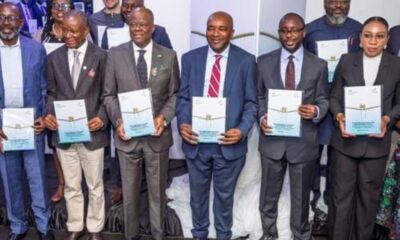
NESG appoints Engr. Adeleye Falade, FNSE to its board
-
 Economy1 day ago
EBID, CORIS Holding sign 80m euro financing agreement to strengthen food, energy, agric value chains in West Africa
-

 Economy3 hours ago
Nigeria woos U.S. solid minerals investors
-
 Oil and Gas3 hours ago
Dangote refinery aims to raise $5bn with October listing, source says
-
 News3 hours ago
DisCos metered 227,559 customers in 2 months— NERC