
Oil and Gas
Oil spill controversy rocks Bayelsa community

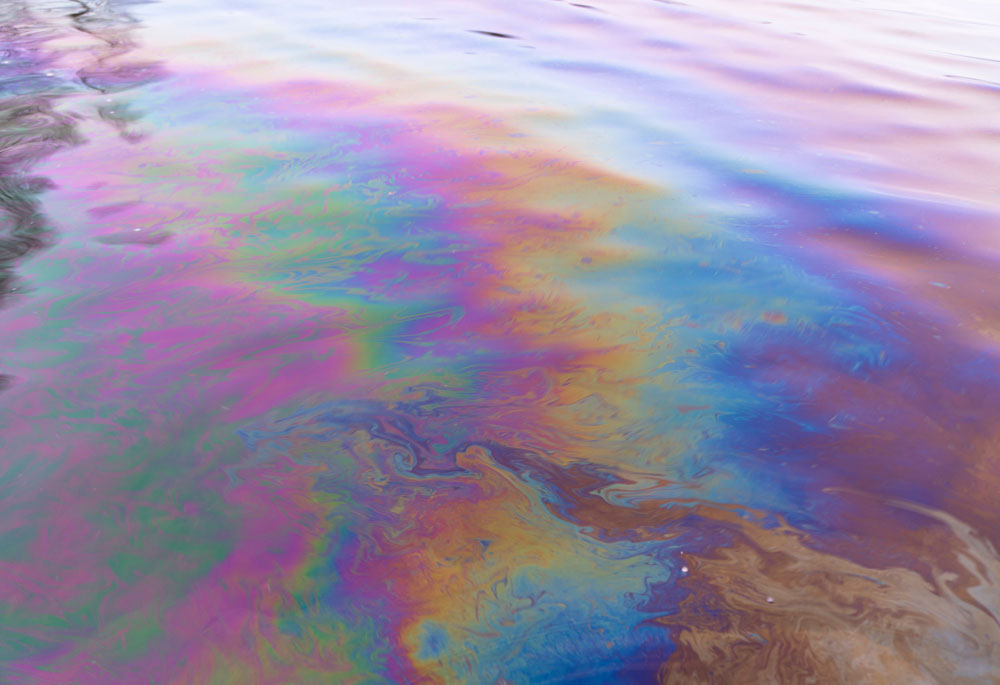
A fresh oil spill has ignited a bitter dispute between Azuzuama community in Southern Ijaw Local Government Area, Bayelsa State and oil operator Oando, with both sides locked in a heated disagreement over the cause of the June 25, 2026 incident.
A field report released on Sunday by the Environmental group ECARD (Environmental Conservation Agriculture and Rural Development) said the spill, which occurred on the 6-inch Azuzuama/Tebidaba flow line, an asset recently divested to Oando by the Nigeria Agip Oil Company (NAOC), has exposed two leak points, including one underwater beneath an oil platform.
The report signed by ECARD’s Chief Operating Officer, Alagoa Morris, quoted community leaders insisting that the spill resulted from corrosion caused by equipment failure, while Oando and regulatory officials maintain it was “induced corrosion,” a term suggesting third-party involvement, commonly classified as sabotage.
Barr. Uyabara Boneghen, Vice Chairman of the Azuzuama Community Development Committee (CDC), expressed strong doubts about the testing process used to determine the spill’s cause.
“I was at the spill site the first day Oando brought an instrument to test the spill point,” Boneghen said. “The testing device was placed at different spots on the pipe and gave consistent readings of 5.0. I questioned: ‘Does this not point to the possibility of preprogramming of your machine? How could it read the same result at up to five different points?’”
He noted that even a machete placed on the pipe produced the same reading, raising suspicion among community representatives.
CDC Chairman Angasei Perediseghebofa said the community observed visible rust at the spill point during the initial inspection.
“It was corrosion, obviously. But Oando said they were not certain and would return with a testing device,” Perediseghebofa said. “When they returned on July 8, the device wasn’t functioning effectively.”
However, a senior officer at the Bayelsa State Ministry of Environment, offered a different assessment based on the spill’s physical evidence.
“That is a 6-inch line straight from the Well to manifold,” the official explained. “The incident happened at the 12 o’clock position. It is induced corrosion. The wrap used in coating the pipe was burnt, meaning acid was used as an inducer.”
He noted that all patches were located at the 12 o’clock, 2 o’clock, and 3 o’clock positions, which he said was inconsistent with natural corrosion patterns. “Sand settles at the bottom of the pipe, not at the top. This suggests deliberate action.”
The current dispute evokes painful memories for Azuzuama residents. On July 9, 2015, 14 persons died along Agip’s Tebidaba-Clough Creek pipeline during a Joint Investigation Visit and subsequent repair efforts at a damaged section of the pipeline. The tragic incident left a lasting scar on the community and has made them particularly vigilant about oil spill investigations.
Community leaders expressed concern that a second spill point, located underwater beneath an oil platform, remains unattended.
“How can an unprofessional dive in there to cause the pipe to leak?” Boneghen questioned. “We only saw gas bubbling to the surface.”
The CDC Chairman added that the underwater leak would only be addressed when water levels recede, a timeline that community members find unsatisfactory.
The Joint Investigation Team (JIT) conducted multiple visits to the spill site, with the most recent on July 15, 2026, yet failed to reach consensus on the cause.
“When an expert tried to say it was man-made, we asked: ‘What caused the corrosion visible on the spill point?'” Perediseghebofa recalled. “This pipe has been here for over 40 years. And what about the one in the river?”
The community called for the pipe section to be cut and sent to Port Harcourt or an independent laboratory for testing, a procedure followed in a previous disagreement that ultimately confirmed equipment failure.
Though the company could not be reached for comment on the community’s allegation about the testing process as of press time, ECARD, which documented the incident, recommended that the operator of the facility proceed with containment and cleanup to prevent further environmental damage.

“Whether gas leak or crude oil, both are hydrocarbon and inimical to the environment, particularly the aquatic environment,” Morris, who is also the technical Adviser to the Bayelsa Governor on Environment said, urging the company to address the underwater leak immediately to prevent further polluting action.
-

 News3 hours ago
NTDA, China partner to attract more Chinese tourists to Nigeria
-

 News3 hours ago
BRICS pushes local currency trade to cut transaction costs
-

 Finance3 hours ago
Subscribe to Dangote Refinery shares through Zenith Bank
-

 News3 hours ago
AD Consulting, Ecobank bring Nigeria’s art, architecture icons together in “The Convergence”
-

 Finance3 hours ago
PAPSS) targets accelerated adoption, transaction growth as network expands across Africa
-
 Maritime3 hours ago
Aquatic life restored in Ogoni creeks—FG