
News
LNG shipping rates hit multi-month highs on tighter vessel availability, winter demand

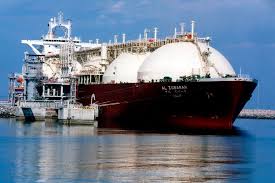
Shipping rates for liquefied natural gas have hit multi-month highs on tighter vessel availability, delayed cargo deliveries to Egypt and rising demand ahead of winter, shipping sources said. The price gains amplify competition for available LNG carriers, reversing the trend of lacklustre shipping rates seen for much of this year. Prices tumble to five-year lows in February as fleet additions outpaced demand, though they jumped to an eight-month top in June on tighter vessel supply and as the Israel-Iran conflict led shipowners to hold off chartering vessels.
Atlantic freight rates assessed for vessels with two-stroke engines capable of carrying 174,000 cubic meters of LNG – the most common type in the market – were at $61,500 per day on Tuesday, coming off Monday’s price of $61,750 per day, according to pricing agency Spark Commodities. That was their highest since late August 2024, and a more than 50% jump from $39,750 per day last Monday.
Pacific rates for the same class of ship were at $42,250 per day on Tuesday, up from $31,250 last Tuesday and the highest since end-June, the data showed. “Recent delays to discharge of LNG cargoes into Egypt have been one contributory factor, with knock-on impacts for vessel itineraries,” said Stephen Gordon, managing director at Clarksons Research. One shipbroker, who declined to be identified as he was not authorised to speak to the media, said Egypt’s request for LNG cargo delivery delays had disrupted vessel scheduling, leading charterers to secure vessels from the market for future loading dates, creating more demand. Gains in LNG shipping prices are also supported by seasonal demand, as importers in the northern hemisphere like Europe and Japan prepare for the approaching winter season.

“You see various utility companies and traders ramping up inventories ahead of colder months,” said a second shipbroker, who also declined to be identified. A recently open arbitrage window for U.S. cargoes delivered to Asia also tightened vessel availability by supporting eastbound flows and increasing voyage durations, said Clarksons’ Gordon. A ramp-up in various U.S. export projects like Plaquemines LNG and Stage 3 of Corpus Christi provided further underlying support, he added. “There appears to be a short-term squeeze on vessel availability, with few ships able to meet November laycans in the Atlantic, and these tonnage availability limitations could provide continued support in the short term,” he said.
Laycans are the periods in which a vessel is expected to load or discharge a cargo at the port. While the U.S. front-month arbitrage to Northeast Asia has closed out, it remains extremely marginal, said Spark Commodities analyst Qasim Afghan. “If the JKM-TTF continues to rally as it has done over the last month, this could quickly shift the arb signal back to Asia over the coming days, renewing the upward pricing pressure on LNG freight rates,” he said. The JKM-TTF is the spread between Asia’s benchmark Japan-Korea Marker and Europe’s Title Transfer Facility.
-

 Oil and Gas14 hours ago
Dangote refinery drops PMS to ₦1,165/Litre, diesel to ₦1,570/litre
-

 News2 days ago
Tinubu approves salary increases for armed forces personnel
-

 Economy2 days ago
Nigeria woos U.S. solid minerals investors
-
Oil and Gas2 days ago
Dangote refinery aims to raise $5bn with October listing, source says
-

 News2 days ago
DisCos metered 227,559 customers in 2 months— NERC
-

 Finance2 days ago
CBN holds fair in Gombe to deepen financial inclusion, promote economic growth
-

 Agriculture2 days ago
African Development Fund grants $4.3m to strengthen integration of natural capital into decision-making in 13 African countries
-

 News15 hours ago
85m Nigerians still lack access to grid electricity—REA