
News
Recent increase in fuel price not justifiable – Ugolor

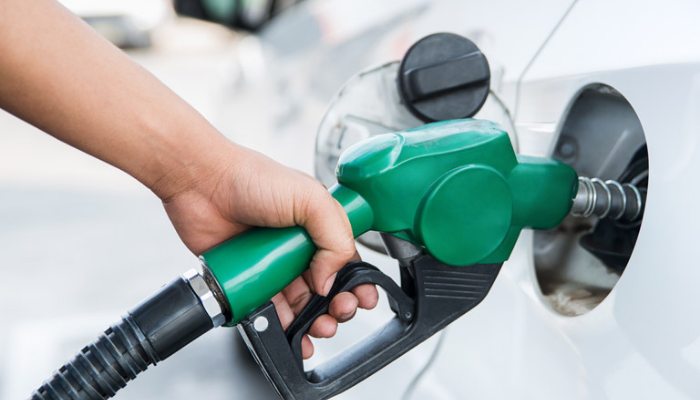
Executive Director of the African Network for Environment and Economic Justice, ANEEJ, Reverend David Ugolor, has described the recent increase in the pump price of fuel in the country as deeply troubling and difficult to justify.
Ugolor, who is also the Publisher of The Common Good Letter, opined that with the decline in the price of crude oil globally, there are no indices to justify a higher pump price of fuel in the country.
“The latest increase in the pump price of petrol is deeply troubling and difficult to justify to Nigerians. Global crude oil prices have declined, the naira exchange rate has remained relatively stable, and the government has announced no new petroleum tax. Yet, citizens have once again woken up to higher prices without any transparent explanation from the refinery, marketers, government or regulators.
“Although Nigeria operates a deregulated petroleum market, deregulation must not mean that citizens are abandoned to arbitrary pricing or the unchecked market power of dominant suppliers. Nigerians deserve a public explanation of the complete pricing structure: the refinery or import cost, exchange rate applied, depot charges, transportation costs, taxes and marketers’ margins.
“The government can and must intervene—not necessarily by imposing an unsustainable price control, but by enforcing transparency, competition and consumer protection.
The NMDPRA and the Federal Competition and Consumer Protection Commission should immediately investigate the latest increase and determine whether it reflects genuine costs or coordinated and exploitative pricing. Any evidence of price-fixing, cartel behaviour, artificial scarcity, under-dispensing or excessive margins should attract appropriate sanctions.

“The government must also publish regular price-component information so that Nigerians can see why prices rise and whether reductions in crude oil prices or improvements in the exchange rate are passed on to consumers. A deregulated market cannot work fairly where one or two dominant suppliers can effectively determine the price for the entire country.
“My position is that the increase should be independently reviewed and transparently explained. If it cannot be supported by verifiable changes in production, importation or distribution costs, it should be reversed.
“The wider problem is the weakening of citizen engagement and organized political opposition. Nigerians repeatedly wake up to major economic decisions taken without consultation or adequate regard for their welfare.
Only informed, organized and sustained citizen action can compel accountability. The #EndBadGovernance movement could have changed this pattern if its momentum had been sustained. Unfortunately, weak opposition parties and the absence of a credible, organized civic opposition have allowed policies that deepen hardship to proceed without sufficient scrutiny.
“Citizens, civil society organizations, labour unions and opposition parties must move beyond isolated complaints. They should jointly demand pricing transparency, regulatory accountability and measurable relief for households, workers and small businesses. Deregulation must serve the public interest; it must not become a licence for private monopolies or government indifference,” he stated.
-
 Stock Market16 minutes ago
NGX Group hails Nigeria’s return to frontier market status
-
 News14 minutes ago
Lagos govt seeks Japan’s partnership to advance transport, youth development
-

 Oil and Gas12 minutes ago
Oil slides on clues about Fed policy, rumors of Hormuz deal
-
 News7 minutes ago
US, Nigeria trade volume rises to $1bn annually – Consul-Gen