
Oil and Gas
Oil up almost 2% as Iran’s president vows to never surrender

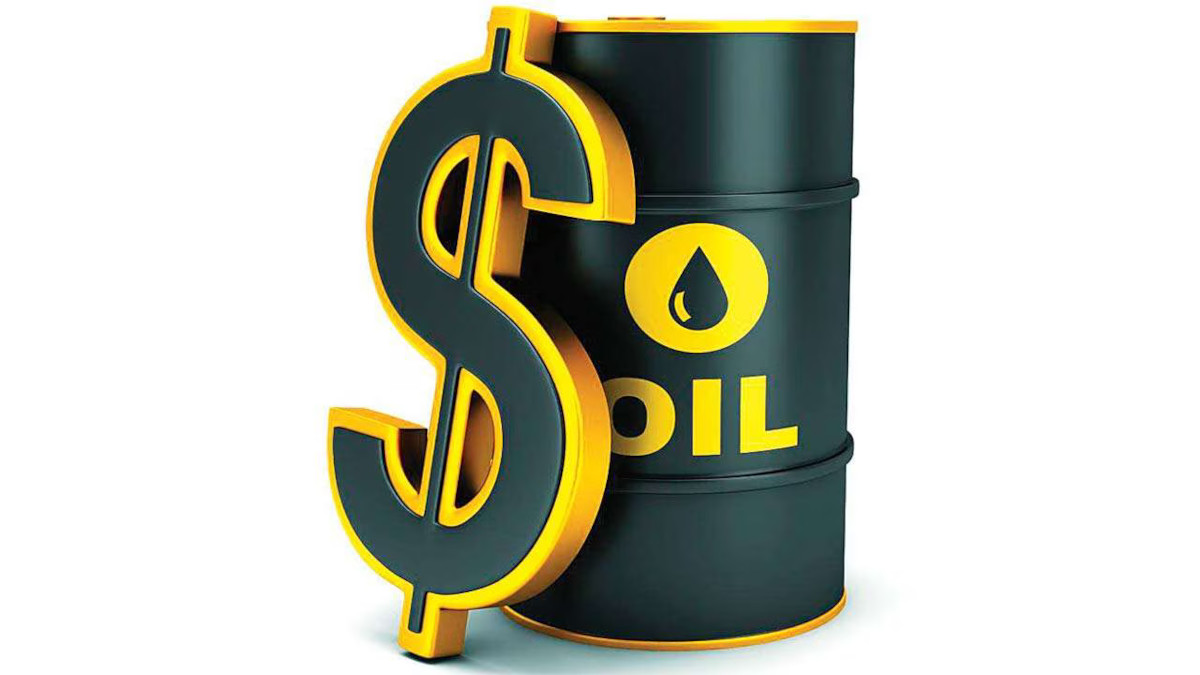
Oil prices were up almost 2% a barrel on Wednesday in choppy trade, as traders evaluated Iranian President Masoud Pezeshkian’s vow never to surrender, a day after US President Donald Trump warned he could “annihilate” Iran.
Brent crude futures rose $1.84, or 1.85%, to $101.09 a barrel while West Texas Intermediate futures gained 69 cents, or 0.76%, to $91.21.
At the UN General Assembly in New York, Pezeshkian said in a speech on Wednesday that Tehran would never surrender to the US but still believes in diplomacy. On Tuesday, Trump used a speech at the same forum to make his threat.
Tehran was reviewing the US response to its proposal to end hostilities, though many differences remain, a senior Iranian official told Reuters.
A reopening of the Strait of Hormuz and lifting of Washington’s naval blockade on Iran were discussed during indirect talks on Tuesday, the official said.
Earlier on Wednesday, Iran’s security chief Mohsen Rezaei had said the Strait of Hormuz would not be reopened while Iran’s conditions are not met.
Meanwhile, European low-sulphur gasoil’s premium to Brent crude futures hit a record of about $95 a barrel after Trump said he backed the idea of a diesel export ban to lower prices that have hit record highs owing to a global supply shortage.
US Energy Secretary Chris Wright said later that a diesel export ban would not work. Analysts and market watchers have warned that such a move would do little to ease high energy prices and could worsen global supplies and further disrupt economies.

Europe has depended on diesel and jet fuel imports from the US during the US-Israeli war on Iran. “Brent is being underpinned by surging gasoil prices amid renewed worries the US may introduce a diesel export ban,” said Ole Hansen, head of commodity strategy at Saxo Bank.
Meanwhile, US crude inventories rose by 3 million barrels to 426.4 million barrels in the week ended September 18, the Energy Information Administration said. Analysts polled by Reuters had expected a 641,000-barrel draw. Fuel stocks fell.
On Tuesday, the Brent benchmark hit its lowest since September 8 at $97.36. Early on Wednesday, WTI touched its lowest since September 1. Prices were pressured by more supplies flowing out of the Middle East and hopes for a peace deal soon between Washington and Tehran.
Saudi Arabia resumed operations on its East-West Pipeline to the Red Sea on Tuesday, said three sources briefed on the matter.”The only news that is worth focusing on from a lower price point is the reopening of the East-West Saudi pipeline,” Hansen added.
Drone attacks, which Saudi Arabia has blamed on Iraqi militia, forced the kingdom to shut the pipeline on September 11, halting crude loadings at Yanbu port.
On Tuesday, Saudi Arabia offered more barrels to Asian refiners for lifting from locations outside of the Strait of Hormuz. Iraq’s minister said on Tuesday the country is exporting more than 3 million bpd, and expects to boost exports via Turkey to more than 600,000 barrels per day.
A senior Iranian official told Reuters the Strait of Hormuz could reopen within seven days if the US eases military pressure and lifts its blockade on Iranian ports. On Wednesday, US Secretary of State Marco Rubio told reporters that both Russia and Ukraine had expressed interest in a limited ceasefire involving grains and energy.
-

 Economy1 day ago
Global economy to stabilize, but fiscal constraints, rising living costs, AI investment uncertainty threatens growth—WEF
-

 Finance1 day ago
ECB, EU central banks suggest dropping stablecoin deposits rule
-

 Economy1 day ago
ITC, Access Bank partner to boost small business growth across 14 African countries
-
 News1 day ago
FG not withdrawing electricity subsidy-Power Minister
-

 Finance1 day ago
CBN reduces MPR to 23%, CPPE lower interest rates alone cannot deliver sustainable economic recovery
-

 News5 minutes ago
Finance minister seeks affordable capital to bridge Africa’s infrastructure gap
-

 Finance15 minutes ago
94.2m Nigerians use financial products, formal inclusion hits 73% — EFInA
-
 News7 minutes ago
Nigeria ranks bottom in Africa as only 12% approve of electricity performance—Report